10 Best Car Audio Systems for Every Budget

A car audio system can transform a short commute: clearer voices, tighter bass, and less fatigue on a long drive. Yet a bigger amplifier or more speakers does not automatically mean better sound. Vehicle size, cabin materials, factory wiring, and listening habits all matter. A compact hatchback with carefully tuned speakers can sound more balanced than a larger system with louder, poorly controlled bass.

The market is growing alongside drivers’ expectations. MarketsandMarkets estimated the automotive audio market at $9.4 billion in 2023 and projected it to reach $12.6 billion by 2028. That growth reflects more than premium factory options; it also points to demand for upgrades and connected listening features. Still, market growth cannot tell you which system suits your budget. Your ears and your vehicle should have the final say.

For a useful benchmark, Dr. Sean Olive, an audio researcher associated with HARMAN, has reported that listeners strongly prefer loudspeakers with “flat, smooth on- and off-axis frequency response.” That principle matters in cars, where glass, seats, and hard panels can color the sound. In this guide, we compare ten options across price ranges, focusing on practical details: speaker fit, installation needs, sound balance, and useful features. Some trade-offs are unavoidable. A low-cost upgrade may improve vocals without delivering deep bass, and that can still be money well spent. The right choice is the one you enjoy at everyday volume.
10 Best Car Audio Systems for Every Budget

How a Car Audio System Works

A car audio system turns a recording into moving air. The source may be a phone, radio tuner, or stored file. A receiver processes that signal and sends it to an amplifier, which supplies enough electrical power for the speakers. Speakers then move cones back and forth, creating sound waves you can hear. Tiny detail. The cabin matters, too: glass, seats, and door panels reflect or absorb sound, so the same setup can sound different in two cars.

Power ratings alone do not predict sound quality. Check RMS output, speaker sensitivity, and impedance, then match components carefully. A mismatch can cause distortion, weak volume, or excess heat. A subwoofer handles low frequencies; smaller door speakers often manage voices and higher notes. Placement changes the result. A speaker pointed at a seat may sound duller than one with a clear path into the cabin. Installation also matters: loose panels can buzz like a paper cup against a dashboard.

SEMA’s 2023 Market Report estimated U.S. specialty-equipment sales at $52.3 billion in 2022. That figure covers many vehicle upgrades, not car audio alone, so it shows the wider aftermarket’s scale rather than audio demand. A useful listening test is simple: play familiar music at a moderate level, sit in the driver’s seat, and listen for clear vocals and balanced bass. Not magic. Small tuning choices can still be subjective; what sounds balanced to one listener may feel thin to another.
Key Components That Shape Sound Quality

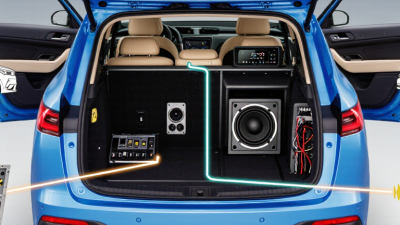
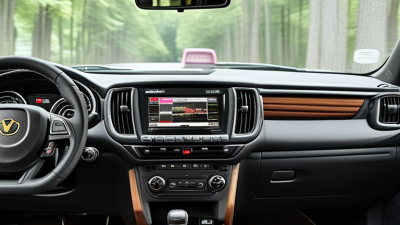
Sound quality starts with a balanced signal path, not a single expensive component. The source unit handles audio files and sends a signal to the amplifier. Clean output helps, but it cannot repair a recording that already sounds harsh or compressed. Keep listening levels moderate during setup; distortion can creep in before it seems obvious.

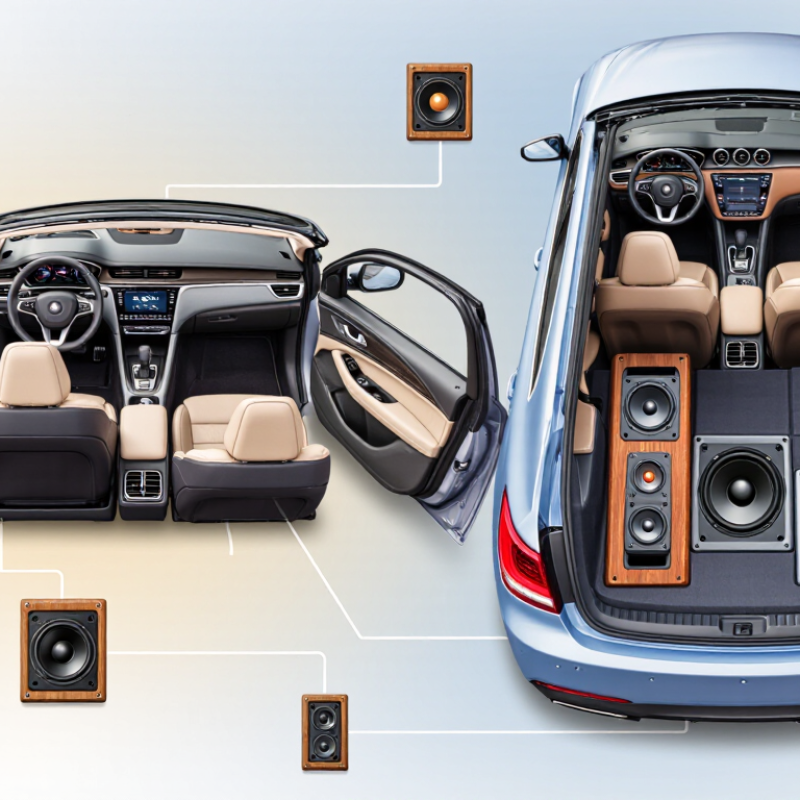
Speakers shape the detail you hear in voices, cymbals, and road noise. Their size matters less than fit, placement, and secure mounting. A loose door panel can rattle on bass notes, while poorly aimed tweeters may make vocals seem sharp. Small details matter. An amplifier can provide cleaner power and more headroom, especially when factory wiring or limited output holds speakers back. More power alone does not guarantee better sound.

A subwoofer adds low frequencies, but its enclosure and placement affect how evenly bass fills the cabin. Too much bass can mask voices, so adjust it while playing familiar music at ordinary driving volume. Wiring, grounding, and careful installation also matter: a poor connection may introduce noise or unstable performance. Cabin acoustics complicate everything. Glass, seats, and hard surfaces reflect sound, so a setting that works in the driveway may feel different on the road. It is tempting to chase perfect measurements, but listening position and personal preference still count. Even careful tuning involves trade-offs.

10 Best Car Audio Systems for Every Budget: Key Components That Shape Sound Quality

Typical operating bands show how key speaker components cover different parts of the audible spectrum. Actual ranges depend on the driver, crossover settings, and system tuning.

Sound-quality takeaway: A well-matched subwoofer, midrange driver, and tweeter can provide broad frequency coverage. Careful crossover and level adjustment helps them blend smoothly.

How to Choose a System for Your Budget

Set your total budget before comparing components. Include installation, wiring, adapters, and any dashboard trim; these costs can surprise you. Keep it simple. A modest system that fits your car well often sounds better than expensive parts installed poorly.

For a tight budget, improve the speakers you hear most, usually the front pair, and check that their size and mounting depth fit your doors. A small upgrade can reveal clearer vocals without adding a bulky amplifier. At a middle price range, consider a compatible receiver and better speakers, but confirm steering-wheel controls and factory-camera connections before buying. For a larger budget, an amplifier and subwoofer can add clean volume and deeper bass. Leave room for professional installation if you are unsure about wiring or vehicle settings.

Listen to familiar music at a normal volume before deciding. Notice whether voices sound harsh, bass rattles a door, or details disappear when the road gets noisy. Ask for an itemized quote, and compare the warranty and return terms. Specifications help, but they do not predict every cabin’s sound. I would not spend the full budget on a subwoofer; it is tempting, though the front speakers may still struggle.

10 Best Car Audio Systems for Every Budget — How to Choose a System for Your Budget
Budget (USD) System Setup Main Components Typical Power Estimated Parts Cost Best For
$150–$250 Basic speaker refresh Pair of replacement front coaxial speakers; speaker adapters or wiring as needed; retain the factory receiver Usually powered by the factory receiver; check speaker sensitivity and impedance for compatibility $150–$250 Drivers who want clearer vocals and treble without replacing the receiver or adding an amplifier
$250–$400 Receiver and front-speaker upgrade Entry-level receiver with Bluetooth; pair of front coaxial speakers; vehicle-specific dash and wiring adapters Receiver power is generally modest; suitable for efficient speakers at everyday listening levels $250–$400 Older vehicles that need modern phone connectivity and a noticeable improvement over worn factory speakers
$400–$600 Front speakers with compact amplification Receiver; front coaxial speakers; compact 2-channel amplifier; basic power and speaker wiring About 40–75 watts RMS per channel, depending on the selected amplifier and speaker load $400–$600 Listeners seeking cleaner, louder front-stage sound with more headroom than a receiver alone can provide
$600–$850 Balanced front-and-rear upgrade Receiver; front and rear coaxial speakers; 4-channel amplifier; wiring and installation accessories About 40–75 watts RMS per channel; match amplifier output to each speaker’s RMS rating $600–$850 Drivers who want improved sound throughout the cabin without adding a subwoofer
$850–$1,100 Component front stage with powered bass Receiver; front component speakers with separate tweeters; compact powered subwoofer; required adapters and wiring Speaker power depends on the receiver; powered subwoofer typically provides roughly 100–300 watts RMS $850–$1,100 Listeners who want better stereo imaging and fuller low frequencies while keeping the system relatively simple
$1,100–$1,500 Amplified component system Receiver; front component speakers; 4-channel amplifier; sealed subwoofer enclosure and mono amplifier; wiring kit Commonly 50–100 watts RMS per speaker channel, plus approximately 300–600 watts RMS for the subwoofer $1,100–$1,500 Music enthusiasts looking for stronger output, controlled bass, and a clear front soundstage
$1,500–$2,000 Sound-treated, tuned daily-driver system Receiver with time alignment or equalization; component front speakers; 4-channel amplifier; subwoofer system; targeted door sound treatment Typically 60–100 watts RMS per speaker channel and 400–800 watts RMS for the subwoofer $1,500–$2,000 Drivers who value reduced door resonance, stronger mid-bass, and more precise tuning
$2,000–$2,700 High-output multi-amplifier system Advanced receiver or signal processor; upgraded front components; multi-channel amplifier; larger subwoofer and enclosure; upgraded wiring Power varies by design; plan around speaker RMS ratings, amplifier load limits, and the vehicle’s electrical capacity $2,000–$2,700 Listeners who want high volume and strong bass while retaining a usable, balanced sound
$2,700–$3,500 Precision-focused system with upgraded installation Signal processor; quality component front stage; multi-channel and mono amplification; subwoofer enclosure; extensive sound treatment and tuning System power should be selected to suit the vehicle’s electrical system and the speakers’ continuous RMS ratings $2,700–$3,500 Enthusiasts prioritizing imaging, tonal balance, and careful acoustic tuning over simply adding volume
$3,500–$5,000+ Custom enthusiast build Vehicle-integrated signal processing; premium-grade speakers; multiple amplifiers; custom subwoofer enclosure; electrical upgrades and professional tuning Custom-designed; electrical upgrades may be needed for high-power systems, depending on the vehicle and amplifier demand $3,500–$5,000+ Drivers seeking a vehicle-specific installation, extensive customization, and high-performance sound

Cost and fitment note: Prices are typical unbranded parts-budget estimates in USD and can vary by vehicle, component size, and local availability. They generally exclude professional labor, taxes, and vehicle-specific integration costs. Check speaker dimensions, impedance, RMS ratings, receiver compatibility, and available electrical capacity before purchasing.

Ten Recommended Car Audio Systems by Price Range

Under $300 Choosing a car audio system by price range starts with deciding what needs improvement. A quality pair of replacement speakers can bring clearer vocals and tighter sound without replacing the entire setup. Check the speaker size and mounting depth against your car before buying. A small mismatch can turn a simple upgrade into extra work.

Around $300 to $800 Consider adding a compact amplifier or a subwoofer alongside better speakers. This range can deliver fuller bass and cleaner volume, especially on long drives.

Above $800 A system with a dedicated amplifier, carefully matched speakers, and sound treatment may offer more control and detail. Keep some budget for installation and wiring. Those costs are easy to overlook. Prices vary by vehicle, and factory equipment can affect compatibility, so treat these ranges as starting points, not guarantees.

More power is not always better; poorly balanced bass can drown out voices. A modest setup, installed correctly, often sounds more satisfying than expensive parts chosen without a plan. The cabin still matters.

Compatibility and Installation Considerations

A car audio system only works well when it fits the vehicle. Start with the vehicle’s year, trim, and existing audio layout. Two cars from the same year can have different wiring or dashboard openings. Check receiver depth, opening size, speaker dimensions, and impedance against reliable fitment information. Also confirm whether factory features, such as steering-wheel controls or a camera display, need an adapter. Small details matter.

Installation needs vary by budget and vehicle. A basic speaker replacement may be manageable with suitable tools, while a new receiver can involve trim removal, wiring adapters, and careful testing. Disconnect the battery before working on electrical connections, and follow the vehicle and equipment instructions. If wires are unclear or panels resist removal, pause and consult a qualified installer. Forcing a clip can leave a dashboard rattling. It is easy to focus on sound quality and underestimate fitment; I would check both before buying.

Tips: Photograph existing connections before removal. Keep screws grouped by panel, and test the system before reinstalling trim. A modest setup installed correctly often sounds better than a pricier system with poor connections.