Choosing the best speaker system for car audio is not simply a matter of buying the loudest model. A balanced system should match your vehicle, amplifier, listening habits, and budget. From practical installation experience, small details often shape the final result. Door depth can limit woofer selection. Factory wiring may restrict power delivery. A speaker can sound excellent in a showroom but disappoint inside a noisy cabin. That reality is easy to overlook.
Reliable decisions begin with verified specifications. Check RMS power handling rather than peak power claims. Confirm impedance compatibility with the head unit or external amplifier. Sensitivity also matters, especially when using factory equipment. A highly sensitive speaker can produce stronger volume with less power. Frequency response provides useful guidance, but it never tells the whole story. Materials, crossover design, mounting location, and cabin acoustics affect what your ears actually hear. Personal listening remains important.
There is no universally perfect choice. Some drivers prefer warm vocals, while others want tight bass and sharp detail. I once underestimated installation quality and blamed the speakers unfairly. The loose mounting caused vibration and weak midbass. That mistake changed my evaluation process. A dependable guide should compare technical data, installation demands, warranty support, and real-world performance. It should also acknowledge uncertainty. Your vehicle may need sound treatment before expensive upgrades become worthwhile. Careful selection creates clearer music, stronger balance, and fewer costly regrets.
How to Choose the Best Speaker System for Car?
Choosing a car speaker system starts with a personal question: what should your daily drive sound like? I often ask drivers to name three songs they know intimately. A warm vocal track, dense rock mix, and low electronic beat reveal different priorities. Listen in the parked car, not only through headphones. Road noise changes everything. If clear speech matters, prioritize balanced midrange and controlled treble. If you enjoy strong rhythm, examine bass response, but do not chase numbers alone. Loudness can hide detail and cause fatigue.
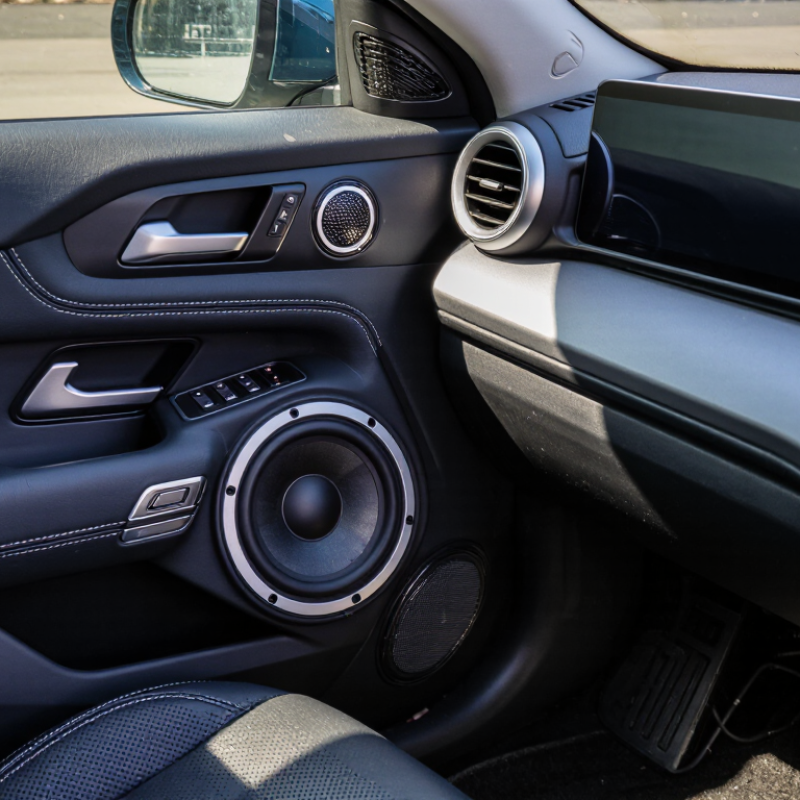
Your listening position also matters. Factory speakers may sit low in the doors, while tweeters can aim toward the glass. This placement affects vocal focus and stereo depth. A reputable installer should explain these effects and test the system from the driver’s seat. Ask about sensitivity, impedance, power handling, and cabin acoustics. These specifications matter more together than separately. I once chose speakers based mainly on impressive bass. The sound felt exciting for ten minutes, then tiring on longer trips. That was a poor judgment. Bring familiar recordings, including quiet acoustic music, and compare at moderate volume. Check whether cymbals remain smooth, voices stay natural, and bass remains tight near the rear seats. Your preferences may change after real driving. Leave room for that.
| Primary Audio Goal | Listening Preference | Recommended System | Useful Speaker Characteristics | Typical Power Guidance | Installation Notes |
|---|---|---|---|---|---|
| Replace worn or damaged factory speakers | Clearer sound without major system changes | Coaxial speakers matched to the vehicle's original locations | Correct mounting depth, matching diameter, and sensitivity of about 88–92 dB | Approximately 15–50 watts RMS per channel, depending on the head unit or amplifier | Verify connector type, mounting bracket, polarity, and door clearance before purchase |
| Improve vocal detail and instrument separation | Balanced, natural sound for acoustic, classical, or vocal music | Two-way component system with separate tweeters and woofers | A dedicated crossover, smooth midrange response, and tweeter-level adjustment | About 40–100 watts RMS per channel is commonly suitable with an external amplifier | Tweeter placement and sound-deadening treatment can strongly affect imaging and clarity |
| Create stronger bass for modern music | Enjoys hip-hop, electronic, pop, or rock with noticeable low-frequency impact | Front component speakers plus a dedicated subwoofer | Front speakers with good midbass capability, supported by a properly crossed-over subwoofer | Use the speaker's RMS rating rather than peak rating; amplifier power should remain within the stated range | A subwoofer handles deep bass more efficiently than small door speakers and requires adequate enclosure space |
| Achieve a wide, front-focused soundstage | Wants vocals and lead instruments to appear in front of the listener | Front component system with carefully positioned tweeters | Smooth off-axis response, adjustable tweeter level, and a well-designed passive crossover | Moderate amplifier power is sufficient when speaker sensitivity is suitable for the system | Front-stage alignment matters more than using identical high-level speakers in every location |
| Play music loudly with low distortion | Frequently listens at high volume for extended periods | High-sensitivity speakers paired with a correctly matched amplifier | Higher sensitivity, robust voice coils, adequate thermal handling, and low distortion at the target volume | Select an amplifier based on continuous RMS output at the speaker's nominal impedance | Avoid clipping; distorted amplifier output can damage speakers even when the amplifier's rated power is lower |
| Keep factory controls and wiring simple | Prefers a practical upgrade with minimal complexity | Vehicle-compatible coaxial speakers with high sensitivity | Usually 4-ohm nominal impedance, high sensitivity, and direct-fit dimensions | Choose power handling that is compatible with the original head unit rather than focusing on maximum wattage | Check whether the vehicle uses unusual impedance, integrated amplifiers, or active factory equalization |
| Build a complete system gradually | Wants a clear upgrade path and controlled budget | Upgrade the front speakers first, then add amplification and a subwoofer | Choose speakers with specifications that will remain suitable after future amplifier upgrades | Match the speaker RMS rating, amplifier RMS output, and vehicle electrical capacity at each stage | Planning impedance, crossover points, and wiring in advance helps prevent compatibility problems |
| Maintain comfort during long drives | Sensitive to harsh treble, excessive bass, or listening fatigue | Balanced speakers with smooth high-frequency response and flexible tuning | Adjustable tweeter output, controlled upper midrange, and accurate tonal balance | Power requirements are moderate; correct tuning is more important than maximum output | Use equalization carefully and avoid excessive treble boost, which can increase fatigue |
Note: Speaker fit, impedance, RMS power handling, sensitivity, and mounting depth should be confirmed against the vehicle and the existing audio system before installation.