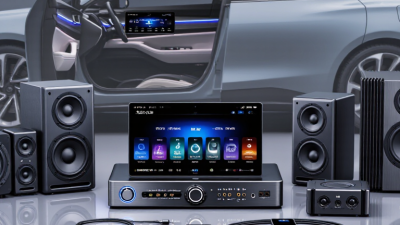
Choosing the best sound system for car use is not simply a search for the loudest speakers. The right setup should make vocals clear, bass controlled, and daily driving more enjoyable. Road noise, cabin size, factory wiring, and personal listening habits all affect the result. A system that sounds impressive in a showroom may feel harsh on a long highway drive.
Experience matters here. Before upgrading, listen carefully to your current system at different volumes. Notice whether voices disappear, bass rattles the door panels, or cymbals become tiring. Small details reveal more than maximum wattage. Check RMS power, speaker sensitivity, impedance, and amplifier compatibility. Manufacturer specifications are useful, but they do not tell the whole story. A professional installer can also identify fitment problems, weak wiring, and battery limitations before damage occurs.
There is no perfect choice.
A balanced upgrade often begins with quality front speakers, proper mounting, and careful sound adjustment. Adding an amplifier may improve control, while a subwoofer can provide deeper bass without forcing door speakers to work too hard. However, more equipment means more cost, installation space, and possible tuning problems. I have seen expensive systems disappoint because the settings were rushed or the speakers were poorly positioned. That is worth remembering. Reliable brands, clear warranties, and documented installation practices offer better confidence than impressive advertising alone. This guide will help compare practical options, avoid common buying mistakes, and build a system that suits your car, music, budget, and everyday expectations.
Choosing a car sound system starts with your listening goals, not the biggest speaker size. Human hearing typically spans 20 Hz to 20 kHz, although age and exposure to loud sound can reduce sensitivity. Low frequencies below 60 Hz create deep bass, while vocals often sit between 200 Hz and 2 kHz. Treble detail can extend from 5 kHz toward 20 kHz.
In my installation experience, road noise changes everything. Tire rumble can hide bass, while ventilation noise masks delicate high frequencies. A system should produce balanced sound at moderate volume, with clear vocals and controlled bass. Listen to familiar recordings with spoken words, acoustic instruments, and steady drums. I once judged a system too quickly because the volume was exciting. Later, I noticed harsh treble during longer drives.
Tips: Check the frequency response, but do not trust one number alone. Ask how the measurement was taken. A claimed 20 Hz response may sound weak without proper enclosure design and power. Use an equalizer carefully, because excessive boosting can cause distortion. Sit in the driver’s seat and adjust the front soundstage before improving rear speakers. Small changes matter. Also, protect your hearing by taking breaks and avoiding sustained high volume. Your hearing may not reveal damage immediately, and that is easy to underestimate.
Choosing a car sound system starts with honest power comparisons. RMS indicates continuous output, not a brief peak. Under CTA-2031-A, amplifiers are tested with defined voltage, impedance, bandwidth, and distortion limits. These conditions make ratings more comparable across systems.
A practical example helps. An amplifier rated at 75 watts RMS per channel can outperform a 300-watt peak system. Peak numbers often describe short bursts. Look for RMS power at the speaker’s actual impedance. A four-ohm rating may change at two ohms. Check both carefully.
CTA-2031-A testing also considers total harmonic distortion, commonly shown as THD. Lower distortion usually means cleaner sound near the rated output. Professional audio measurements consistently show that distortion rises as amplifiers approach their limits. Keep some headroom. A system operating below its maximum often sounds more relaxed.
I have seen buyers chase bigger numbers. It is an easy mistake. Cabin size, speaker sensitivity, and installation quality matter too. A sensitive speaker may play loudly with less power. A poorly sealed door can waste it. Compare test conditions, not advertisements. Also verify whether the stated RMS figure applies to one channel or all channels driven. That detail can change the real result.
Compare representative continuous RMS power ratings measured using CTA-2031-A-style conditions. RMS power is more useful than peak power when matching an amplifier to speakers, but actual output depends on impedance, voltage, distortion limits, and installation.
Values shown are representative category benchmarks at 4 ohms and approximately 14.4 V DC, using a 1% THD+N limit. Always compare ratings tested under the same conditions.
Choosing a car sound system starts with matching speaker impedance to amplifier capability. Common ratings are 2 Ω, 4 Ω, and 8 Ω. Lower impedance allows more output, but it demands more current and creates greater heat.
At 14.4 volts, a 2 Ω speaker theoretically draws 7.2 amps and receives about 104 watts. A 4 Ω speaker draws 3.6 amps and receives roughly 52 watts. An 8 Ω speaker draws 1.8 amps and receives about 26 watts. Real amplifiers deliver less because of efficiency losses and voltage limits. IEC 60268-5 also treats loudspeaker impedance as frequency-dependent, not a perfectly fixed number. That detail matters. A speaker marked 4 Ω may dip lower during heavy bass.
Check the amplifier’s continuous RMS rating at the exact impedance. Never rely only on peak power. A 2 Ω load can sound impressive, but an unstable amplifier may overheat or shut down. A 4 Ω setup is often easier to balance for daily driving. An 8 Ω speaker can work well with specialized equipment, though it usually needs more amplifier voltage. Measure with a multimeter, then confirm the wiring diagram. Small mistakes become expensive quickly.
J.D. Power’s 2024 U.S. Initial Quality Study recorded 49.1 problems per 100 vehicles in infotainment, the highest problem category. Clean installation matters. Keep power cables separate from signal wiring, secure the ground, and test at normal listening volume. I would not choose impedance from loudness alone. The quieter option may deliver cleaner bass for years.
| Nominal Speaker Impedance | Typical Automotive Application | Amplifier Load Requirement | Current at 100 W RMS | Relative Power Behavior | Wiring Example | Best Matching Guidance |
|---|---|---|---|---|---|---|
| 2 Ω | Common in high-output subwoofers and some aftermarket speakers designed for dedicated car audio amplifiers. | The amplifier must be rated for a 2 Ω load per channel or for the final 2 Ω bridged load. A lower-than-specified load can cause overheating, protection shutdown, or damage. | Approximately 7.1 A RMS, calculated as √(100 W ÷ 2 Ω). | At the same amplifier voltage, a 2 Ω load can draw approximately twice the power of a 4 Ω load. It also demands more current. | Two 4 Ω speakers wired in parallel produce a 2 Ω final load. | Choose this level when the amplifier explicitly supports 2 Ω operation and has adequate cooling and current capacity. |
| 4 Ω | The most widely used nominal impedance for many car speakers, component sets, coaxial speakers, and subwoofers. | Most car amplifiers are designed to operate safely at 4 Ω per channel. Confirm the amplifier’s minimum rated impedance before installation. | Approximately 5.0 A RMS, calculated as √(100 W ÷ 4 Ω). | Provides a balanced compromise between power demand, amplifier efficiency, heat generation, and installation flexibility. | Two 2 Ω speakers wired in series produce a 4 Ω final load. Two 8 Ω speakers wired in parallel also produce 4 Ω. | Use 4 Ω when broad compatibility, moderate current demand, and dependable daily operation are priorities. |
| 8 Ω | Less common in standard car-audio speaker systems; may be used in specialized installations or when multiple speakers are combined. | The amplifier should be stable at 8 Ω. An 8 Ω speaker is generally safe for an amplifier rated for 4 Ω, but the amplifier may deliver less power at the higher load. | Approximately 3.5 A RMS, calculated as √(100 W ÷ 8 Ω). | At the same amplifier voltage, an 8 Ω load draws about half the power of a 4 Ω load and places less current demand on the amplifier. | Two 4 Ω speakers wired in series produce an 8 Ω final load. | Choose 8 Ω only when the amplifier is suitable for that load and the expected acoustic output is sufficient for the vehicle. |
How to Choose the Best Sound System for Your Car?
A capable subwoofer should cover the typical 20–80 Hz bass range. This range delivers kick-drum impact, deep electronic tones, and the low rumble of a cinematic soundtrack. ISO 226:2003 equal-loudness data show that human hearing becomes far less sensitive near 20 Hz. Therefore, a subwoofer must move more air at the lowest frequencies. Do not judge performance by peak wattage alone.
Check the manufacturer’s measured frequency-response graph. Look for usable output from about 25 Hz to 80 Hz, rather than an impressive single-number claim. The Audio Engineering Society notes that low-frequency measurements require controlled conditions, because room gain and distortion can change perceived bass. A car cabin adds strong reinforcement below roughly 60 Hz, although the exact effect depends on cabin size and seating position. Small spaces can sound powerful. They can also sound uneven.
During testing, play familiar tracks with steady bass lines. Sit in the driver’s seat, then check the rear seats. Listen for tight impact at 60–80 Hz and clean extension near 30 Hz. A muddy note often indicates poor crossover integration, excessive gain, or enclosure resonance. Set the low-pass filter near 70–80 Hz, then adjust by ear and measurement. I once preferred more bass, but the extra level hid vocals and made long drives tiring. That mistake still matters: accurate bass is usually quieter than exaggerated bass. Calibration software and an inexpensive measurement microphone can reveal peaks your ears miss.
How to Choose the Best Sound System for Your Car?
A convincing car-audio specification needs more than a high wattage number. I test systems with the engine running, because alternator noise can expose weaknesses quickly. Total harmonic distortion, or THD, shows how much unwanted distortion the amplifier adds. Below 0.1% is a useful practical target, but measurement conditions matter. AES17-2020 and IEC 60268-3 describe controlled methods for measuring distortion and signal-to-noise performance. Ask whether the result includes noise, uses a 1 kHz tone, and states the output level. A tiny THD figure at low volume may not represent real driving.
Signal-to-noise ratio, or SNR, indicates the distance between music and electronic hiss. An SNR near 90 dB is generally strong for vehicle listening, although wiring, gain settings, and cabin noise can reduce the benefit. Use weighted and unweighted figures carefully. Frequency response should reveal balance across the audible range, commonly 20 Hz to 20 kHz. CTA-2031-A measurement guidance supports reading response graphs rather than trusting a single headline number. A near-flat curve, such as ±3 dB, usually sounds more natural, yet door position and glass reflections can create peaks.
Listen at moderate volume.
I once favored deeper bass and ignored a sharp upper-midrange peak. That choice became tiring after twenty minutes. Check both the graph and your ears. Reports from controlled laboratories are valuable, but every vehicle remains an imperfect listening room.