Best Car Stereo Systems from China for Global Buyers?

Buying car stereo systems from China can offer impressive features without the price of many established brands. However, global buyers need more than a bright touchscreen and a long specification sheet. Factory compatibility, amplifier quality, software stability, microphone performance, and after-sales support can determine the real value.

Richard Clark, a respected car-audio educator and competition expert, once stated, “The goal of a sound system is to reproduce the recording as accurately as possible.” That principle remains useful when comparing Chinese head units, DSP processors, speakers, and complete upgrade packages. A system may advertise 4G connectivity, wireless CarPlay, high-resolution audio, and a powerful processor. Yet poor tuning can produce harsh treble, weak bass, or distracting road noise.

Details matter. A buyer should check the vehicle’s dashboard dimensions, steering-wheel controls, CAN bus compatibility, camera inputs, and regional radio frequencies. Wiring quality matters too. So does the availability of firmware updates and replacement parts. Some manufacturers provide responsive technical support; others offer little after purchase.

This guide examines car stereo systems from China for international buyers. It considers sound quality, installation difficulty, durability, certification claims, user feedback, and total ownership cost. Real-world testing is more revealing than marketing language. A unit that starts quickly in a showroom may behave differently after months of heat, vibration, and software updates.

Our comparisons will not pretend every result is universal. Listening preferences differ. Vehicle acoustics differ. Even reliable products can have occasional faults. That uncertainty deserves attention. For this reason, the guide balances measurable specifications with practical experience, verified seller information, and honest limitations.

Best Car Stereo Systems from China for Global Buyers?

What Defines a High-Quality Chinese Car Stereo System?

A high-quality Chinese car stereo system is defined by performance, integration, and dependable manufacturing, not by appearance alone. During installation tests, I look for a clean interface, stable wireless connections, and quick responses from the touchscreen. Audio should remain balanced at low volume and clear when the cabin becomes noisy. Weak systems often use impressive specifications but struggle with heat, vibration, or long-term software stability.

Hardware details matter. A reliable unit should include a responsive processor, sufficient memory, strong wiring, and accurate steering-wheel control support. Screen brightness must remain readable in direct sunlight. The microphone should capture speech without excessive road noise. Proper vehicle compatibility is essential, because a small wiring mismatch can disable factory controls or create unwanted battery drain. I have seen attractive systems fail here. That experience changed my testing routine.

Tips: Ask for a complete compatibility list before ordering. Confirm screen size, dashboard fit, camera input, and vehicle-control support. Request real photos of the rear connectors, not only polished marketing images. Check operating temperature, warranty terms, software update methods, and local technical support. Independent reviews are useful, but installation feedback from the same vehicle model is more valuable. Look for documented quality checks and relevant regional compliance evidence. A low price can be reasonable, yet unclear specifications deserve caution. Even experienced buyers sometimes overlook the supplied harness, which may require an additional adapter.

Which Types of Car Stereos Are Available from China?

China’s car stereo market offers several practical formats for global buyers. The familiar single-DIN unit fits many older dashboards with limited depth. Double-DIN models provide larger displays and more room for processing hardware. Some vehicles need a factory-style receiver with matching trim and connectors. Fitment matters more than screen size. A loose bezel quickly reveals poor planning. Buyers should measure the dashboard opening, mounting points, and available wiring before ordering.

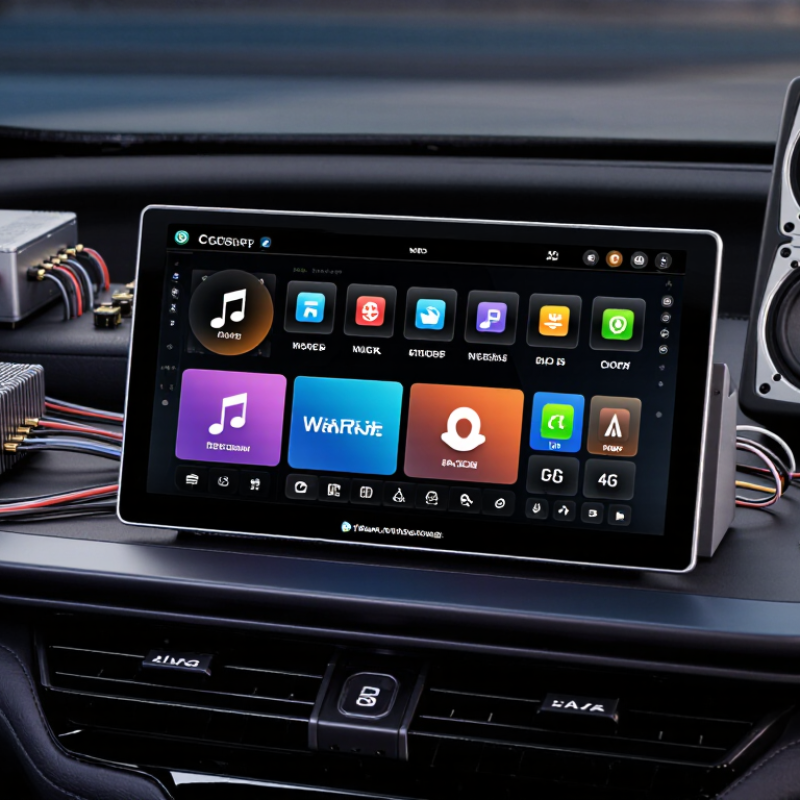
Android-powered receivers support navigation, split-screen apps, voice control, and wireless phone integration. Linux-based systems usually start faster and offer fewer distractions. Digital-media receivers remove the disc drive, focusing on USB, Bluetooth, and radio playback. Units with integrated digital signal processors can adjust time alignment, equalization, and crossover settings. Basic models may only offer balance and bass controls. That difference becomes obvious with factory speakers. Floating-screen designs create a tablet-like display above the dashboard, while flush-fit units look more original.

For commercial evaluation, request a working sample, wiring diagram, software version, and independent safety documentation. Confirm radio frequencies, regional navigation support, language options, and steering-wheel compatibility. Check whether the reverse-camera input matches the vehicle’s signal type. Do not rely on a translated specification sheet alone. I have seen impressive feature lists hide weak microphones, slow boot times, or unstable wireless connections.

That gap deserves scrutiny. A responsible supplier should explain update policies, warranty handling, and replacement-part availability. Compare power ratings using RMS figures, not exaggerated peak numbers. Small details decide whether installation feels professional or improvised.

How to Match a Chinese Stereo with Your Vehicle?

Choosing a Chinese car stereo begins with your vehicle, not the screen size. Measure the dashboard opening and confirm single-DIN or double-DIN dimensions. Check the wiring harness, steering-wheel controls, reverse camera, and factory amplifier. A unit may fit physically but still lose important functions. I recommend photographing every connector before ordering. This simple record prevents expensive guesses. Verify operating voltage, radio frequencies, and vehicle compatibility through the seller’s technical sheet. Do not trust a universal-fit claim alone. It often means “nearly compatible,” not perfectly integrated.

Tips: Match the processor to your daily use. Factory speakers usually need moderate power, not impressive wattage. Confirm wireless standards, microphone placement, and screen brightness. Request a wiring diagram and return conditions in writing. Test every function before trimming panels. Keep the original parts. You may need them later.

Installation quality affects reliability as much as the hardware. Use a proper adapter, secure the ground, and protect exposed wiring from heat. After installation, test audio balance, parking sensors, camera delay, Bluetooth calls, and steering controls. In my experience, small menu translation errors and slow startup times may appear after several weeks. They can escape the first inspection. Leave time for updates and adjustment. A careful match should feel like part of the car, not an unrelated tablet attached to it.

What Features Matter for Global Buyers?

For global buyers, compatibility matters more than a large screen. The unit should support common smartphone projection standards and stable Bluetooth calling. J.D. Power’s 2024 U.S. Tech Experience Index places smartphone connectivity among the most valued vehicle technologies. Menus should offer clear English and additional language options. Radio tuning must match regional FM, AM, and digital broadcast bands. A mismatch can make an expensive system nearly useless.

Power and vehicle integration deserve careful testing. Buyers should confirm 12-volt compatibility, steering-wheel control support, reverse-camera input, and the correct CAN-bus adapter. Display brightness also matters. In direct sunlight, a weak panel becomes difficult to read. Grand View Research reports that the automotive infotainment market is growing at roughly 9% annually through 2030, increasing the pressure for reliable hardware and software. Growth alone does not guarantee durability.

Security and update support are easy to overlook. Look for documented firmware procedures, transparent privacy settings, and a clear warranty process. TÜV Rheinland’s automotive cybersecurity guidance emphasizes secure software updates and protection against unauthorized access. That standard is practical, not decorative. I would also check boot time, microphone quality, and offline navigation before ordering. Some sellers promise universal fitment, but “universal” often needs extra wiring, trimming, or paid accessories. That is where my own confidence would become cautious.

Best Car Stereo Systems from China for Global Buyers: What Features Matter?

The chart presents a practical buyer-priority index from 0 to 100 for evaluating internationally suitable car stereo systems. Higher scores indicate features that typically have a greater impact on compatibility, usability, installation, and long-term ownership.

Global buyers generally prioritize vehicle compatibility, wireless smartphone integration, multilingual support, stable connectivity, safety features, and reliable after-sales service over purely cosmetic upgrades.

How to Verify Quality, Compatibility, and Supplier Reliability?

Best Car Stereo Systems from China for Global Buyers?

A reliable purchase starts with a detailed compatibility check. Measure the dashboard opening, not only the advertised screen size. Confirm voltage, connector type, radio frequencies, and operating temperature. Ask whether the unit supports steering-wheel controls and the original reverse camera. Some vehicles also require a compatible data interface. This detail is often missed.

Request a sample before placing a large order. Test boot time, touch response, Bluetooth calls, microphone clarity, and audio noise. Use the stereo during cold starts and long drives. Inspect the wiring harness for clean crimping, firm insulation, and clear labels. Review safety and quality certificates through the issuing organization, not only through scanned files. An independent inspection report adds useful evidence. Still, it cannot reveal every production problem.

Supplier reliability needs practical proof. Check the company’s legal registration, export history, warranty process, and response speed. Ask for production photos, test records, and references from similar markets. Confirm replacement terms in writing, including defective screens and missing accessories. I once trusted polished product photos and overlooked poor night visibility. That mistake was expensive. A factory may pass a sample test yet change components later. Random inspections during production reduce this risk, although they increase cost. Good communication matters, but documented performance matters more.

Best Car Stereo Systems from China for Global Buyers? - How to Verify Quality, Compatibility, and Supplier Reliability?

Verification Dimension Practical Requirement or Benchmark How Global Buyers Can Verify It Common Risk Recommended Evidence
Vehicle Fitment Confirm the dashboard opening, mounting depth, connector layout, and vehicle production year before ordering. Send the exact vehicle model, market, year, trim level, original head-unit photographs, and dashboard measurements to the supplier. A unit may fit the dashboard but fail to support the original wiring, factory display, or steering-wheel controls. Confirmed fitment sheet, installation photographs, wiring diagram, and written compatibility confirmation.
Screen and Touch Panel Check screen size, resolution, viewing angle, brightness, touch response, and operating temperature range. Request a specification sheet and test video showing cold start, daytime visibility, multitouch response, and reverse-camera switching. Unverified panel quality may cause poor sunlight readability, dead pixels, slow touch response, or premature failure. Screen test report, pixel policy, brightness specification in nits, and sample-unit inspection.
Operating System and Performance Evaluate processor type, memory capacity, storage, boot time, application stability, and software update policy. Test the actual production configuration rather than relying only on marketing descriptions or interchangeable memory claims. Lower-than-advertised memory or outdated software can cause freezing, slow navigation, and application crashes. System-information screenshots, firmware version, boot-time video, and signed configuration sheet.
Radio Compatibility Verify supported AM/FM frequency ranges, tuning steps, regional settings, and radio sensitivity for the destination market. Ask for the exact regional firmware setting and test the unit with local stations before bulk shipment. Incorrect tuning steps or frequency coverage can reduce station selection and reception quality. Regional frequency table, sensitivity test results, and destination-market sample test.
Wireless and Smartphone Functions Verify Bluetooth calling, microphone performance, wireless smartphone projection, wired projection, and reconnection behavior. Pair several phone models using the destination region's operating-system versions and test calls, music, navigation, and reconnect cycles. Functions may work only with selected phones, specific software versions, or a wired connection. Compatibility matrix, call-quality recording, pairing test log, and software-support statement.
Audio Performance Assess continuous output power, signal-to-noise performance, distortion, equalizer functions, preamp outputs, and amplifier stability. Request laboratory measurements and compare them with an independent sample test at a defined load and voltage. Peak power figures can be presented as continuous power, creating unrealistic performance expectations. Audio test report specifying test voltage, load impedance, distortion level, and measurement method.
Vehicle Electronics Integration Confirm support for steering-wheel controls, reverse trigger, parking sensors, factory amplifier, camera input, and vehicle data interfaces where applicable. Use a vehicle-specific bench harness or installed test vehicle and document every retained function. Incorrect integration can produce warning lights, battery drain, lost vehicle settings, or nonfunctional safety-related signals. Function checklist, wiring schematic, integration-module details, and installation test video.
Power and Electrical Safety Verify operating voltage, reverse-polarity protection, over-current protection, standby current, thermal protection, and fuse specification. Review electrical test records and measure current draw during operation, sleep mode, startup, and shutdown. Excessive standby current may discharge the vehicle battery; inadequate protection may damage the unit or wiring. Electrical safety report, fuse rating, current-draw measurements, and thermal test results.
Environmental Durability Check high-temperature, low-temperature, humidity, vibration, and repeated power-cycle performance suitable for vehicle use. Ask for test conditions, sample size, test duration, acceptance criteria, and failure records instead of a generic durability claim. Laboratory claims without defined conditions may not represent real vehicle vibration or cabin heat exposure. Environmental test reports, traceable sample numbers, and corrective-action records.
Regulatory and Market Compliance Confirm radio, electromagnetic compatibility, electrical safety, wireless, chemical, labeling, and packaging requirements for the destination market. Check that certificates identify the same manufacturer, model, hardware revision, and wireless configuration as the shipped product. Certificates may apply to a different model, outdated revision, or incomplete configuration. Complete test reports, declarations of conformity, label artwork, and model-to-certificate mapping.
Supplier Manufacturing Capability Evaluate production capacity, quality-control staff, assembly process, traceability, engineering support, and subcontracting transparency. Conduct a video or third-party factory audit and compare the audited site with the contracting and shipping entities. A trading intermediary may provide limited engineering control or inconsistent production sources. Business registration details, factory audit, process-flow chart, quality manual, and production-capacity evidence.
Quality-Control Process Require incoming inspection, assembly inspection, firmware verification, functional testing, aging, final inspection, and serial-number traceability. Review inspection standards, sampling levels, defect classification, and actual production records for the ordered model. Inconsistent inspection can result in dead pixels, loose connectors, software errors, or missing accessories. Inspection checklist, aging records, serial-number list, defect-rate data, and pre-shipment inspection report.
Sample and Pilot Order Approve a production-representative sample before committing to a larger order. Install and test the sample in the target vehicle under local climate, network, radio, and smartphone conditions. A demonstration unit may use different components or firmware from the mass-production version. Sample approval record, pilot-order inspection, approved bill of materials, and firmware hash or version record.
Warranty and After-Sales Support Define warranty duration, covered failures, response time, replacement policy, repair responsibility, and shipping-cost allocation. Include service terms in the purchase contract and test the supplier's technical response before ordering. Unclear warranty terms can leave the buyer responsible for return freight, labor, or repeated failures. Signed warranty policy, spare-parts list, repair workflow, support contacts, and response-time commitment.
Packaging and Logistics Protect screens and connectors against impact, moisture, static electricity, and compression during international transport. Approve packaging samples, drop-test criteria, carton markings, accessory packing, and export documentation. Transit damage, missing cables, incorrect labels, or incomplete customs documents can delay installation and resale. Packaging specification, drop-test record, packing list, carton photographs, and shipment inspection report.
Commercial Reliability Assess quotation transparency, lead time, minimum order quantity, payment terms, change-control procedure, and supply continuity. Compare written quotations, verify legal entities and bank details independently, and require notification before component or firmware changes. Uncontrolled changes may create compatibility problems, delivery delays, or inconsistent units across batches. Formal quotation, sales contract, approved bill of materials, change-notification clause, and verified payment instructions.
Buyer’s Decision Rule: Approve a supplier only after the exact production model passes vehicle-fitment testing, electrical and functional inspection, destination-market compliance review, and a pilot-order quality check.