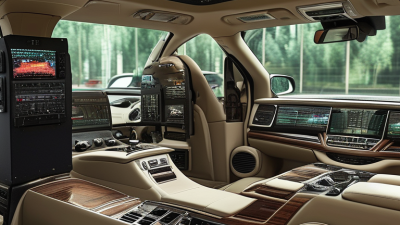
Choosing the best China car stereo speakers requires more than comparing prices and wattage. A convincing system should produce clear vocals, controlled bass, and detail at ordinary driving volume. It should also fit your vehicle’s doors, factory head unit, wiring, and available amplifier power. Small differences matter. A poorly sealed door can make expensive speakers sound thin.
Richard Clark, a respected car-audio judge and educator, once said, “The best system is the one that sounds best to you.” That principle remains useful when reviewing car stereo speakers from Chinese manufacturers. Many brands now offer polypropylene cones, silk-dome tweeters, strong neodymium magnets, and practical component sets. However, specifications do not tell the entire story. A high sensitivity rating may improve volume, while a lower impedance can place greater demands on the amplifier.
This guide examines construction, sound balance, installation quality, warranty support, and real-world value. We consider how speakers perform with spoken podcasts, bright rock guitars, and deep electronic bass. We also recognize an uncomfortable limitation: factory claims are not always measured under identical conditions. Some products look impressive on paper but lose clarity near maximum volume. Others appear modest yet sound surprisingly natural.
The right choice may not be the loudest model. It may be the pair that keeps cymbals smooth during a long highway drive. Used carefully, these comparisons can narrow the field without pretending that every listener wants the same sound.
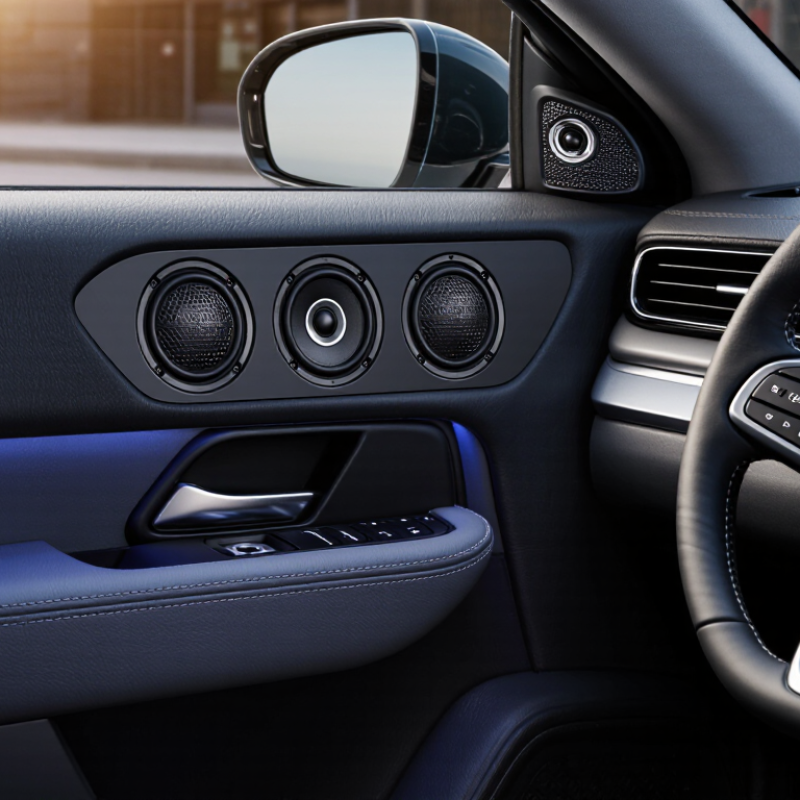
Choosing the best China car stereo speakers starts with understanding speaker types, not appearance. Coaxial speakers place the tweeter above the woofer, saving installation space. Component systems separate these drivers and usually deliver clearer vocals. Subwoofers handle low frequencies, adding weight to kick drums and engine-free listening. Full-range speakers remain practical for basic replacements.
Fortune Business Insights estimated the global automotive audio market at approximately US$4.8 billion in 2023. That growth reflects demand for better sound in compact vehicles. However, specifications can be inconsistent across online listings. Check impedance, sensitivity, frequency range, and continuous power handling. A 4-ohm speaker may suit many factory systems, while higher sensitivity can produce more volume from limited amplifier power. Numbers alone do not guarantee balanced sound.
Installation details matter. Measure the mounting depth before ordering, especially near window mechanisms. A 165-millimeter door speaker may still require a compatible adapter ring. Silk or soft-dome tweeters often sound smoother, while metal domes can provide sharper detail. Polypropylene cones resist moisture better than untreated paper in humid doors. The Consumer Technology Association’s 2024 research shows continued consumer interest in connected and in-vehicle technology, but convenience can distract from acoustic basics. I have found that “more bass” is often mistaken for better sound. It is not always better. Listen for clean vocals at moderate volume, and leave room for equalizer adjustment. Some advertised frequency ranges look impressive but reveal little about distortion or real cabin performance.
What Are the Best China Car Stereo Speakers?
How to Compare Sound Quality, Compatibility, and Installation Requirements
Sound quality starts with balanced performance, not exaggerated bass. Listen for clear vocals, controlled cymbals, and steady midrange detail. A useful speaker should remain clean at moderate volume. Check its frequency response, sensitivity, impedance, and continuous power rating. These figures help, but they do not replace listening in your own vehicle. Door materials, cabin noise, and speaker placement can change the result significantly. Short listening tests can reveal harsh treble or weak vocals quickly.
Compatibility requires careful measurement. Confirm the speaker diameter, mounting depth, screw pattern, and grille clearance before ordering. Check whether the vehicle uses factory amplification or unusual wiring. A high-power speaker may perform poorly with a weak original amplifier. An adapter harness can protect the factory wiring and simplify removal later. Correct polarity matters. Reversed polarity can make bass sound thin and strangely distant.
Installation quality often decides the final experience. Secure the speaker firmly, seal gaps around the mounting ring, and prevent wire vibration against the door panel. Basic door damping can reduce rattles, although excessive material adds weight and cost. I once focused too much on power ratings and ignored mounting depth. The speaker touched the window mechanism. That mistake required extra work. Professional installers usually verify clearance before tightening every fastener. Still, even experienced work deserves a final test with familiar music, different volume levels, and both front seats occupied.
How to Compare Sound Quality, Compatibility, and Installation Requirements
The chart uses a practical 1–5 comparison scale based on common speaker characteristics: tonal detail, vehicle compatibility, installation simplicity, and low-frequency capability. Component systems generally provide better sound staging, while coaxial systems are usually easier to install. Always verify impedance, mounting depth, cutout diameter, sensitivity, and RMS power handling before purchasing.
Choosing the best China car stereo speakers depends on the vehicle, cabin size, and listening habits. China’s automotive market reached 31.44 million vehicle sales in 2024, according to the China Association of Automobile Manufacturers. That variety creates different audio demands. Compact cars usually benefit from efficient 5.25-inch or 6.5-inch coaxial speakers. Their smaller cabins need controlled bass, not excessive power. SUVs and vans can use larger component systems with separate tweeters. These systems create clearer voices across wider interiors.
Electric vehicles require extra care. Their quiet cabins reveal hiss, distortion, and weak installation work. A speaker with moderate sensitivity can perform well with factory amplifiers. High-power systems may need a dedicated amplifier and stronger wiring. For classic vehicles, shallow-mount speakers are often safer. Deep baskets can interfere with window mechanisms. According to J.D. Power’s 2024 China Initial Quality Study, infotainment and connectivity remain important quality concerns for vehicle owners. Speakers should therefore match the head unit, not work against it.
Tips: Check mounting depth before buying. Measure the door opening twice. Use foam rings to reduce vibration. Listen for harsh treble at medium volume. Do not judge bass with the door panel removed. That test can mislead you. A professional installer should verify polarity and impedance. Even expensive components may sound disappointing in a poorly sealed door. I have found that careful damping often improves clarity more than simply choosing higher wattage. There is no perfect setup, and cabin reflections still require honest adjustment.
Choosing the best China car stereo speakers requires more than checking price or maximum wattage. Materials strongly affect sound and lifespan. Polypropylene cones usually resist moisture and temperature changes. Woven fabric cones can produce smoother detail. Paper cones may sound warm, but they need better protection from humidity. A flexible rubber surround often lasts longer than cheap foam. Still, no material is perfect.
Power handling should be judged by RMS ratings, not impressive peak numbers. Match the speaker’s RMS range with the amplifier’s continuous output. Higher sensitivity can create stronger volume with less power. During installations, I check for heat buildup, loose terminals, and cone movement after extended listening. A speaker rated at 60 watts RMS is not automatically better than one rated at 40 watts. My own mistake was trusting peak power and ignoring sensitivity. The system played loudly, but distortion appeared sooner than expected. That result changed how I compare specifications.
Tips: Inspect the cone edge for uneven glue or wrinkles. Listen at moderate volume for buzzing, scratching, or harsh vocals. Check the mounting depth before buying. Leave enough space behind the speaker for airflow. Avoid forcing a speaker into a damp door panel. Even careful testing has limits. Road vibration, sunlight, and poor installation can shorten service life. Reliable choices usually combine sensible power ratings, weather-resistant materials, solid terminals, and a warranty with clear technical details.
A practical comparison of common car-speaker configurations using typical specifications for aftermarket products. Actual performance depends on installation quality, enclosure design, amplifier settings, and vehicle acoustics.
| Speaker Configuration | Common Size | Typical Cone Material | Surround Material | Typical RMS Power | Typical Peak Power | Frequency Range | Sound Character | Durability Considerations | Best Use | Overall Evaluation |
|---|---|---|---|---|---|---|---|---|---|---|
| Coaxial 2-Way | 4 in / 5.25 in / 6.5 in | Polypropylene or coated paper | Rubber or treated foam | 30–70 W | 60–140 W | Approximately 55 Hz–20 kHz | Balanced, convenient, and easy to install | Polypropylene resists moisture well; rubber surrounds generally last longer than untreated foam in hot or humid vehicles. | Factory-replacement upgrades and simple systems | ★★★★☆ |
| Coaxial 3-Way | 5.25 in / 6.5 in / 6 × 9 in | Polypropylene, mica-reinforced polymer, or treated paper | Rubber or thermoplastic elastomer | 40–90 W | 80–180 W | Approximately 45 Hz–20 kHz | More detailed upper midrange and treble than basic factory speakers | Rigid cones improve output stability; additional small drivers add complexity and require secure mounting. | Daily listening with moderate amplifier power | ★★★★☆ |
| Component 2-Way | Usually 6.5 in midbass plus separate tweeter | Glass-fiber, woven fabric, polypropylene, or treated paper | Butyl rubber or high-grade synthetic rubber | 50–100 W | 100–200 W | Approximately 45 Hz–22 kHz | Clearer imaging, stronger midbass, and better stereo separation | Separate crossover networks must be kept dry; rubber surrounds and sealed terminals improve long-term reliability. | Sound-quality-focused installations | ★★★★★ |
| Slim-Mount Coaxial | 4 in / 5.25 in / 6.5 in | Polypropylene or lightweight paper composite | Foam, rubber, or thermoplastic elastomer | 25–60 W | 50–120 W | Approximately 60 Hz–20 kHz | Clean and practical where mounting depth is limited | Reduced cone depth can limit low-frequency output; ventilation around the voice coil is important for heat control. | Doors with shallow speaker openings | ★★★☆☆ |
| 6 × 9 in Full-Range | 6 × 9 in | Polypropylene or coated paper | Rubber or treated foam | 50–100 W | 100–200 W | Approximately 35 Hz–20 kHz | Strong midbass and high output from a large oval cone | Larger cones can produce more excursion and heat; a rigid basket and reinforced terminals help prevent vibration damage. | Rear-deck systems and higher-output listening | ★★★★☆ |
| Dedicated Midbass Driver | 6.5 in / 8 in | Woven fiber, fiberglass, polypropylene, or treated paper | Butyl rubber or reinforced synthetic rubber | 60–150 W | 120–300 W | Approximately 45 Hz–5 kHz | Powerful low and midrange punch with limited treble output | Works best with a proper crossover; high excursion and amplifier clipping are the main long-term stress factors. | Systems using separate tweeters and amplifiers | ★★★★☆ |
| Marine-Style Coaxial | 6.5 in / 8 in | UV-resistant polypropylene or synthetic composite | Butyl rubber or weather-resistant elastomer | 40–100 W | 80–200 W | Approximately 45 Hz–20 kHz | Clear output with enhanced resistance to moisture and sunlight | Sealed baskets, corrosion-resistant terminals, UV-stable materials, and protective grilles are valuable in humid environments. | Convertibles, utility vehicles, and damp climates | ★★★★☆ |
| High-Sensitivity Coaxial | 5.25 in / 6.5 in / 6 × 9 in | Lightweight paper composite or polypropylene | Rubber or treated foam | 30–80 W | 60–160 W | Approximately 50 Hz–20 kHz | Good volume from factory head units with modest power | Efficient designs reduce amplifier demand; avoid excessive clipping when driving high volume from a low-powered source. | Factory head units and low-power upgrades | ★★★★☆ |
| Selection guide: For the best balance of value and easy installation, choose a 2-way coaxial speaker with a polypropylene cone and rubber surround. For stronger imaging and refined detail, a component set is usually the better choice. For humid or high-UV conditions, prioritize sealed construction, corrosion-resistant terminals, UV-stable plastics, and butyl-rubber surrounds. | ||||||||||
What Are the Best China Car Stereo Speakers?
Where to Buy China Car Stereo Speakers and How to Check Their Value
Reliable sellers matter more than a low sticker price. Look for established audio retailers, verified online marketplaces, or local installation shops with clear contact details. A trustworthy seller should provide complete specifications, real product photos, warranty terms, and a practical return policy. Avoid listings that only promise “powerful sound” without technical measurements.
Check the speaker’s RMS power, not only its peak wattage. RMS shows the output it can handle during normal use. Match the speaker impedance with your car stereo or amplifier. Sensitivity above 90 dB can produce stronger volume with modest power. Also inspect frequency response, cone material, surround flexibility, mounting depth, and terminal quality. These details affect installation and long-term performance.
Listen before buying when possible. Voices should sound natural, while bass should remain controlled at higher volume. I once chose a speaker with impressive specifications, but its deep mounting frame did not fit my door. That mistake was avoidable. Ask for exact dimensions and wiring requirements. User reviews can reveal rattling, weak grilles, or slow warranty service, although reviews are not always reliable. A better value combines fair sound, safe construction, usable support, and a return option. Low cost alone is not value.