Choosing the best Singing Bowl requires more than trusting a beautiful tone or polished product photograph. Size, alloy, craftsmanship, playing method, room acoustics, and personal sensitivity all shape the experience. A bowl that feels warm and resonant in a quiet studio may sound harsh beside tiled walls. Small details matter.
The market deserves careful attention. The Global Wellness Institute reported that the global wellness economy reached $5.6 trillion in 2022. It projected growth to $8.5 trillion by 2027 in its 2023 Global Wellness Economy Monitor. This growth encourages better products, but it also creates exaggerated claims. Buyers should separate relaxation benefits from medical promises. The National Center for Complementary and Integrative Health explains that evidence for music-based approaches varies, and these practices should not replace professional healthcare. Evidence remains limited for singing bowls specifically. A 2017 observational study in the Journal of Evidence-Based Complementary & Alternative Medicine reported reduced tension and improved mood after a singing bowl meditation session. However, it lacked a strong control design.
A practical choice begins with your purpose. Are you seeking meditation, gentle background sound, bodywork support, or a focused musical pitch? Compare sustain, volume, rim response, weight, and surface quality. Listen from several distances. Feel the vibration carefully. Do not assume the largest bowl is the deepest or the most useful. Some sellers describe metal composition vaguely, so transparent specifications and return policies deserve priority. This guide will examine those factors with a useful degree of caution. No bowl is perfect. Your room, technique, and expectations may matter as much as the instrument itself.
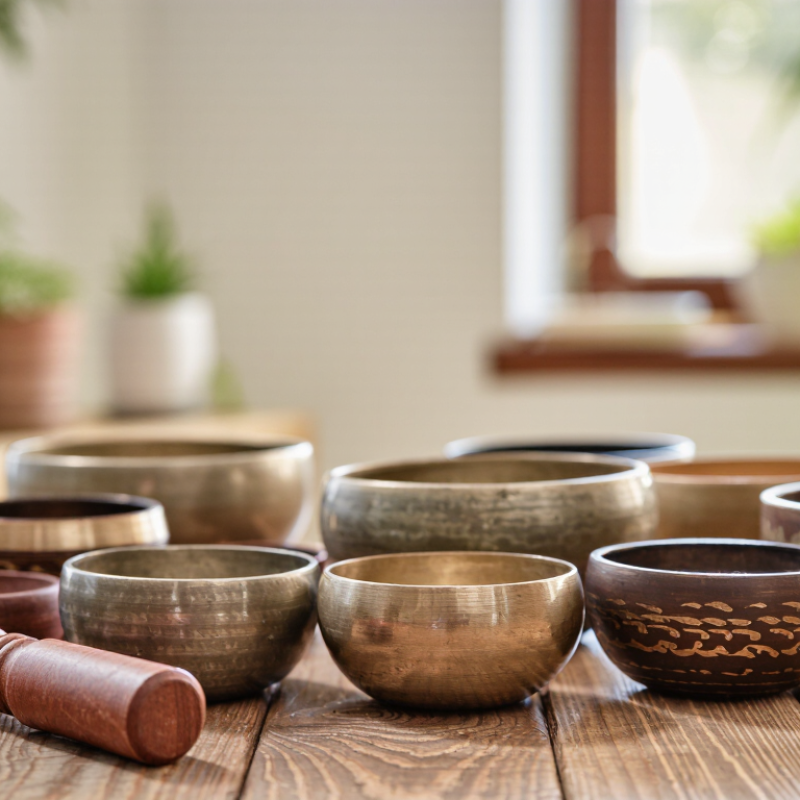
Choosing a singing bowl begins with understanding how different types behave. Traditional Himalayan metal bowls produce layered tones, gentle vibrations, and complex overtones. Their sound often changes with pressure, speed, and striking position. They suit meditation, sound practice, and slow personal rituals.
Crystal bowls usually create a clear, focused tone with a long sustain. Their sound can feel brighter and more direct than metal bowls. They are often chosen for group sessions or tone-based exercises. However, their volume may feel intense in a small room. I once preferred a crystal bowl’s purity, then found its sharp resonance tiring after ten minutes. Personal response matters.
Tips: Test before buying. Strike the bowl softly, then circle the rim slowly. Notice whether the sound feels steady, harsh, warm, or overly bright. Check the bowl’s weight and stability. A heavier metal bowl may feel grounded, while a lighter one can be easier to carry. Size also affects pitch and volume, but shape and thickness matter too. Do not choose by appearance alone. Your room, practice style, hearing comfort, and playing technique should guide the decision. No bowl guarantees medical results; sound experiences remain personal and should complement, not replace, professional care.
| Singing Bowl Type | Typical Material | Common Size Range | Sound Characteristics | Distinctive Features | Best Suited For | Key Buying Considerations |
|---|---|---|---|---|---|---|
| Hand-Hammered Himalayan Bowl | Usually a bronze-based alloy, often made from copper and tin | Approximately 10–30 cm in diameter | Complex, warm, layered tones with a noticeable blend of fundamental and higher partials | Visible hammer marks, irregular surface details, and individual tonal variation | Meditation, sound relaxation, personal practice, and ceremonial use | Listen before purchasing when possible; handmade bowls can vary significantly in pitch, sustain, weight, and rim response |
| Machine-Made Metal Bowl | Commonly brass or another copper-based alloy | Approximately 10–35 cm in diameter | More consistent pitch and a cleaner, more predictable ringing tone | Uniform shape, smooth walls, and consistent production specifications | Beginners, classrooms, studios, and buyers seeking repeatable sound | Check the actual tone, sustain, wall thickness, and whether the bowl is tuned to a stated musical note |
| Crystal Singing Bowl | Fused quartz crystal | Approximately 15–40 cm in diameter | Clear, sustained, and prominent single-note resonance with strong volume potential | Often has a frosted or polished surface and a relatively precise pitch | Sound baths, group sessions, and users who prefer a focused tone | Quartz bowls can be fragile and loud; inspect for chips or cracks and use a suitable rubber mallet |
| Japanese Rin or Standing Bell | Bronze or other cast metal alloys | Approximately 7–20 cm in diameter | Bright, focused strike with a clean decay and comparatively direct resonance | Typically sits on a cushion and is struck rather than continuously rubbed around the rim | Opening or closing meditation, mindfulness practice, and home altars | Choose a bowl with a stable base, a comfortable striker, and a decay length that suits the intended space |
| Large Floor or Gong-Style Bowl | Thick bronze-based or brass-based metal | Approximately 30–60 cm or more in diameter | Deep, resonant, and spacious sound with strong low-frequency presence | Requires floor space and produces a broad sound field that can fill a room | Professional sound sessions, large rooms, and group relaxation practices | Consider weight, storage, room acoustics, volume control, and safe placement before buying |
| Small Travel Bowl | Usually a thin bronze-based alloy or brass | Approximately 7–12 cm in diameter | Higher, lighter tone with shorter sustain than many larger bowls | Compact, lightweight, and easy to store or carry | Travel, personal mindfulness, small workspaces, and beginners with limited storage | Prioritize comfortable handling, a clear response from a light striker, and sufficient volume for the intended setting |
Note: Size ranges, pitch, sustain, and tonal color vary according to the bowl’s thickness, shape, alloy, manufacturing method, and playing technique. Musical notes are not determined reliably by size alone.

How to Choose the Best Singing Bowl for Your Needs?
Choosing a singing bowl becomes easier when its size matches your intended use. Small bowls are portable and produce brighter, higher tones. They work well for personal meditation, travel, or quiet morning rituals. Larger bowls create deeper vibrations and longer resonance. I prefer them for spacious rooms, group sessions, and slow breathwork. Measure your available space first. A beautiful bowl can feel overwhelming in a small bedroom.
Material also shapes the playing experience. Metal bowls often offer layered overtones, changing subtly with pressure and striking speed. Their sound may feel warm, complex, or slightly unpredictable. Crystal bowls usually produce a clear, focused tone with strong projection. However, their sound can become intense in reflective rooms. Handle them carefully, and place them on a stable, suitable surface. Material alone does not determine quality.
Listen before buying whenever possible. Strike the bowl gently, then circle the rim slowly. Notice how long the tone lasts and whether the sound feels comfortable. For meditation, choose a tone that supports calm attention rather than excitement. For a sound session, consider several notes that blend without harsh clashes. I once selected a large bowl because its low tone impressed me, but it dominated every other sound. That mistake taught me to test bowls within their real setting. Your preference may change after repeated listening. Trust your ears, but question the first impression.
Matching bowl size, material, and sound to your intended use
Larger bowls generally produce deeper, longer-lasting tones that suit meditation, grounding, and room-filling sound. Smaller bowls tend to create higher, more focused tones for short rituals, relaxation, and attention cues. These frequency ranges are approximate because bowl shape, wall thickness, alloy, striking position, and mallet type can significantly change the result. Material usually influences timbre and sustain more than it determines an exact pitch.
Tone and resonance should guide your choice, not appearance alone. Strike the bowl gently, then listen for a stable fundamental tone and clean overtones. A harsh buzz may indicate uneven vibration, although some players enjoy that character. I once preferred the brightest bowl, but its sound became tiring after several minutes. The best tone depends on your room, touch, and purpose.
Resonance is more than loudness. Listen to how long the sound continues after the mallet leaves the rim. A well-balanced bowl often produces a gradual decay without sudden gaps. The Global Wellness Institute’s 2024 Global Wellness Economy Monitor valued the wellness economy at $6.3 trillion in 2023. That growth encourages careful buying, but market popularity does not prove acoustic quality. Test the bowl in person when possible. Recordings can hide weak sustain.
Craftsmanship affects both sound and playing comfort. Inspect the rim for smoothness, check the base for stability, and look for irregular dents that affect vibration. Hand-hammered surfaces may create complex overtones, while precisely shaped bowls can feel more predictable. Neither result is automatically superior. Your mallet should feel secure, and the bowl should respond without excessive force. Keep volume moderate; NIOSH identifies 85 dBA over eight hours as a recommended exposure limit. Small rooms can feel surprisingly loud. A comfortable playing experience matters more than a perfect specification sheet.
A singing bowl should fit your space before it fits your expectations. In a small room, a compact bowl may create a clear tone without overwhelming nearby listeners. Larger bowls usually produce deeper resonance, but they need more storage and playing space. Place a sample on a stable surface, then listen from different corners. The sound can change noticeably across the room.
Your budget should include more than the bowl itself. Consider a suitable mallet, a cushion, and possible delivery costs. A lower-priced bowl can still work well if its rim feels even and its sound remains steady. Check for cracks, sharp edges, or unstable bases. If buying online, review return terms and listen to recordings carefully. Recordings are useful, but they cannot show every detail.
Tips: Beginners often manage a medium-sized bowl more easily. Start with gentle pressure and slow circles around the rim. A softer mallet may produce a warmer sound. Do not chase dramatic claims about healing frequencies; personal response varies. I once chose a bowl by appearance and regretted it because the tone felt too bright. Testing with your own hands is more reliable. If possible, ask an experienced seller how the bowl responds to different playing techniques.
Before buying a singing bowl, test it with the mallet you will actually use. Strike the rim gently, then circle it slowly. Listen for a steady tone, clean sustain, and unwanted buzzing. A cracked rim may sound attractive briefly, but its vibration often fades unevenly. Place the bowl on a firm, level surface. Check whether it wobbles. Listen for wobble. Handmade bowls can vary, so a lower pitch does not automatically mean better quality. Your hands should feel comfortable, not strained, during repeated playing. Audio recordings can mislead because microphones change overtones and room acoustics.
Volume also deserves attention. The World Health Organization’s 2022 Global Standard for Safe Listening recommends no more than 80 dB average exposure for 40 hours weekly. NIOSH uses 85 dBA for an eight-hour occupational exposure, with shorter safe periods at higher levels. Measure your bowl with a phone meter or sound-level meter from ear height. This is not laboratory testing, but it is better than guessing. After purchase, wipe metal bowls with a soft, dry cloth. Keep water, oils, and abrasive cleaners away from unfinished surfaces. Crystal bowls need padded, stable storage and careful handling around their rims. Never stack them without protection. My own mistake was leaving a bowl near a humid window; small surface marks appeared within weeks. Inspect it before each session, especially after travel. Stop playing if you notice a new crack, sharp edge, or sudden change in tone.


