How to Choose the Right Carbide Furnace for Your Business?
Choosing the right Carbide Furnace is a production decision, not merely an equipment purchase. It affects energy use, output stability, product quality, maintenance time, and workplace safety. A furnace may look impressive on paper, yet perform poorly under your actual operating conditions.
Industrial-furnace authority W. Trinks wrote, “The furnace is the heart of the process.” That principle remains useful for carbide producers. The furnace must match your raw materials, batch size, reaction temperature, power supply, cooling method, and operating schedule. A small plant may value flexible loading and simple maintenance. A large operation may need continuous feeding, automated control, and strong heat recovery.
Look closely at electrode design, refractory life, transformer capacity, and gas management. Ask how quickly technicians can replace worn parts. Inspect the control cabinet, not only the polished exterior. A reliable supplier should provide energy data, temperature records, service plans, and references from comparable plants.
Experience matters here. I have seen buyers focus on purchase price, then struggle with unstable temperatures and expensive downtime. That mistake is easy to make. It is also avoidable.
Do not trust every promised efficiency figure. Request test conditions and written performance limits. Compare total ownership cost over several years, including electricity, electrodes, labor, repairs, and lost production. Your ideal Carbide Furnace should support safe, repeatable operation while leaving room for future capacity. Sometimes, the cheapest option is not cheap.
Understanding Carbide Furnaces and Their Core Functions
How to Choose the Right Carbide Furnace for Your Business?
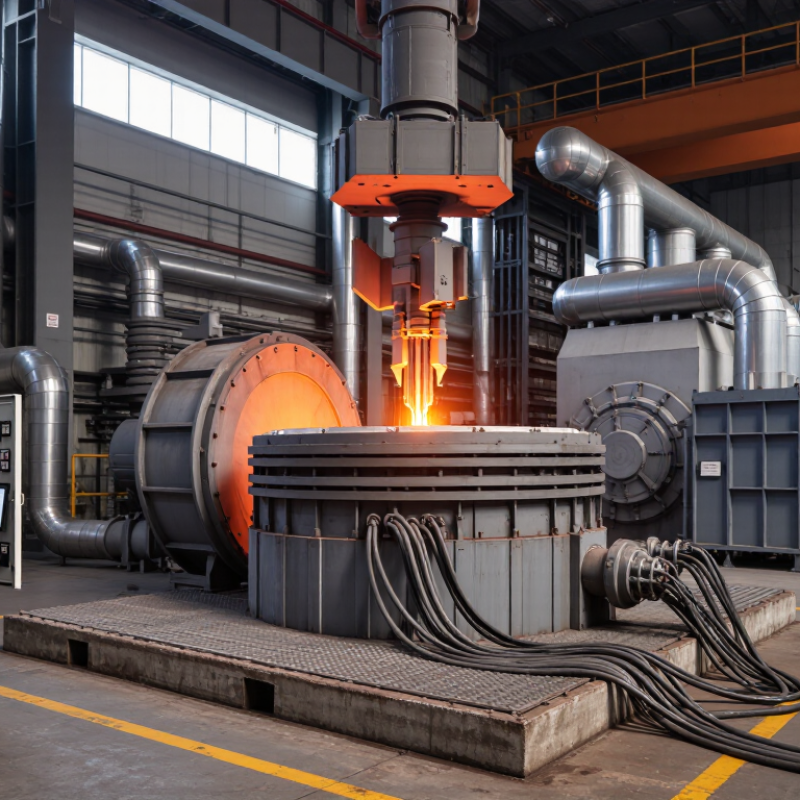
A carbide furnace converts electrical energy into intense heat for producing calcium carbide. Its core function is simple, but its operating demands are severe. The furnace melts a lime and carbon mixture inside a controlled electric arc. Temperatures can exceed 2,000°C. The process then produces molten carbide and carbon monoxide-rich off-gas.
That gas requires sealed handling, monitoring, and carefully designed extraction. Cooling systems protect electrodes, furnace shells, and tapping equipment. Reliable charge feeding also matters. Uneven material flow can create unstable arcs, local overheating, and inconsistent carbide quality. Small details matter.
The U.S. Geological Survey’s 2024 Mineral Commodity Summaries identifies calcium carbide as an important feedstock for acetylene and chemical manufacturing. This supports selecting equipment around end-use quality, not only furnace capacity. The U.S. Department of Energy’s Industrial Decarbonization Roadmap reports that process heating represents about 51% of industrial energy use. Therefore, transformer efficiency, electrode control, heat recovery, and standby power deserve close inspection. A larger furnace is not automatically better. It may increase output while worsening energy losses and maintenance pressure. Field assessments often reveal a less obvious issue: operators trust production figures, but overlook tapping downtime and off-gas stability. Measure both. Review actual power consumption, electrode wear, cooling-water temperature, and batch variation before choosing a design. Even experienced teams can underestimate these factors.
Defining Your Production Requirements and Furnace Capacity
How to Choose the Right Carbide Furnace for Your Business?
Defining production requirements should come before comparing furnace specifications. A cemented carbide operation may process small inserts, long wear parts, or dense industrial components. Each product changes the heating pattern, loading method, and cycle time. Record the largest part dimensions, average batch weight, powder composition, binder content, and required daily output.
Capacity is not simply the chamber’s advertised volume. Usable space must allow gas circulation, thermal expansion, and consistent temperature around every load. A furnace that holds 100 kilograms may process much less after spacing and fixture requirements are considered. Calculate capacity from actual production data: batch mass, debinding time, sintering time, cooling time, and expected operating hours. Leave room for maintenance and unexpected delays.
Small details matter. Check temperature uniformity across the working zone, vacuum stability, gas-flow control, and data recording functions. These features help operators trace density, hardness, and dimensional variation. A reliable furnace should also match local safety requirements and the company’s available utilities.
Avoid choosing capacity only for future growth. Oversizing can increase energy use and reduce flexibility for small batches. Undersizing creates overtime and production bottlenecks. A practical review may reveal that the first estimate was too optimistic. Recheck it with real loading trials, not spreadsheets alone.
How to Choose the Right Carbide Furnace for Your Business? - Defining Your Production Requirements and Furnace Capacity
| Production Profile | Recommended Furnace Rating | Indicative Calcium Carbide Output | Annual Output at 330 Operating Days | Typical Specific Energy | Typical Electrode Diameter | Suitable Business Stage |
| Pilot or Small Local Operation | 3–5 MVA | 15–25 tonnes/day | 4,950–8,250 tonnes/year | 2,800–3,500 kWh/tonne | 300–400 mm | Market testing, regional supply, and limited downstream consumption |
| Growing Commercial Plant | 6–10 MVA | 30–50 tonnes/day | 9,900–16,500 tonnes/year | 2,800–3,400 kWh/tonne | 350–500 mm | Stable regional demand with room for moderate production expansion |
| Medium-Scale Industrial Plant | 15–25 MVA | 75–125 tonnes/day | 24,750–41,250 tonnes/year | 2,700–3,300 kWh/tonne | 450–600 mm | Continuous industrial demand and integrated chemical production |
| Large Integrated Operation | 30–40 MVA | 120–200 tonnes/day | 39,600–66,000 tonnes/year | 2,700–3,200 kWh/tonne | 500–700 mm | High-volume production, captive consumption, and long-term contracts |
Key Production and Site Requirements
| Evaluation Dimension | What to Define Before Selection | Practical Planning Guidance |
| Target Output | Required tonnes per day, monthly demand, and expected annual growth | Size the furnace around realistic average demand rather than short-term peak orders. |
| Raw Material Quality | Lime purity, coke fixed-carbon content, ash level, moisture, and particle-size distribution | Consistent feed chemistry and size improve furnace stability and reduce specific energy consumption. |
| Electricity Supply | Available grid capacity, voltage level, power factor, tariffs, and outage frequency | Confirm transformer capacity and grid connection before committing to a high-MVA furnace. |
| Operating Pattern | Continuous operation, planned maintenance hours, product changeovers, and staffing model | Use a realistic utilization factor; annual output should allow for maintenance and production interruptions. |
| Environmental Controls | Furnace gas capture, dust collection, carbon monoxide monitoring, noise control, and waste handling | Include gas-cleaning and ventilation systems in the initial engineering budget and site layout. |
| Cooling and Utilities | Closed-loop cooling water, emergency cooling, compressed air, material handling, and backup power | Provide redundant critical utilities where an unplanned shutdown could damage furnace components. |
| Expansion Strategy | Future production target, available land, substation expansion, and additional raw-material storage | Allow space and utility capacity for a second furnace or a larger transformer when growth is highly probable. |
Note: The capacity and energy figures are indicative planning ranges for submerged-arc carbide furnaces. Actual performance depends on raw-material quality, furnace design, operating practice, electrode management, utilization rate, and local operating conditions.
Comparing Furnace Types, Heating Methods, and Temperature Ranges
Choosing a carbide furnace starts with the powder, binder system, production volume, and required density. For small or changing batches, a vacuum batch furnace offers flexible recipes and careful control. It supports debinding, sintering, and cooling in one controlled cycle. Continuous furnaces suit stable, high-volume production, but they demand consistent loading and maintenance. A pressure-assisted furnace can reduce porosity when the application requires stronger mechanical performance. That matters.
Heating method affects both efficiency and microstructure. Resistance heating with graphite elements is common because it handles high temperatures and supports broad chamber sizes. Induction heating responds quickly, yet coil design and load geometry can create uneven heating. Temperature range should match each stage, not just the peak number. Debinding may occur around 300–600°C, while carbide sintering often reaches roughly 1,350–1,600°C. Pressure-assisted cycles may use similar temperatures under controlled gas pressure. Exact values depend on carbide grade, binder content, furnace design, and process data.
In plant evaluations, operators should check temperature uniformity across the working zone. A small cold spot can produce visible density differences between trays. Ask for calibrated thermocouple records, oxygen-control data, leak-test results, and repeatability reports. Do not judge capacity by chamber volume alone. Usable load, heating rate, cooling time, and maintenance access affect output. No furnace is perfect. Attractive specifications can fail when recipes are difficult to repeat. Leave room for trials, operator training, and process correction before committing capital.
How to Choose the Right Carbide Furnace
Typical temperature ranges for cemented-carbide processing. Vacuum and hydrogen sintering are commonly used for controlled atmosphere processing, while SPS and HIP support rapid densification or pressure-assisted treatment. Actual settings depend on carbide grade, binder composition, part geometry, and required density.
Evaluating Energy Efficiency, Automation, Safety, and Maintenance
Choosing a carbide furnace requires more than comparing rated temperature. The useful question is how steadily it converts electricity into controlled heat. Review kWh per batch, insulation design, cooling losses, and standby consumption. A well-sealed hot zone can reduce wasted energy during long sintering cycles. Ask for measured data under a load similar to yours. Empty-chamber figures can mislead.
Automation should protect repeatability, not simply add screens and sensors. Look for recipe control, logged temperature profiles, pressure monitoring, and alarm history. Automatic gas regulation can stabilize the atmosphere when production conditions change. Remote access is useful, but it must include permissions and secure audit trails. Operators still need clear manual controls during a sensor fault. People matter. Test whether staff can identify a failed thermocouple before material is lost. This practical trial often exposes weaknesses that brochures hide.
Safety evaluation should cover gas detection, over-temperature protection, pressure relief, electrical isolation, and emergency shutdown. Ask how the furnace behaves after a power interruption. A controlled recovery is safer than an abrupt restart. For maintenance, inspect access to heating elements, seals, filters, and thermocouples. Request service intervals, spare-part lead times, and documented calibration procedures. I would not accept vague promises. An energy-saving furnace can still become expensive if cleaning requires long downtime. Leave room for uncertainty. Actual performance depends on batch size, loading pattern, and operator habits.
Selecting a Reliable Supplier and Calculating Long-Term Costs
Choosing a carbide furnace starts with production reality, not a glossy capacity figure. Match furnace output to feedstock quality, operating hours, power availability, and required product grade. Ask suppliers for measured energy consumption at a comparable load. Request drawings, control philosophies, refractory specifications, and documented test results. Ask harder questions.
A reliable supplier should provide traceable references from plants with similar scale and process conditions. Speak with operators, not only sales staff. Ask how quickly they supply critical spares, troubleshoot alarms, and support refractory replacement. Review training, commissioning plans, safety documentation, and service response times. A low purchase price can hide weak engineering or expensive downtime. Check the contract scope carefully. Is installation included? What happens when performance falls below the agreed target?
Calculate long-term cost over several years. Include purchase, civil work, installation, electricity, electrodes, cooling water, labor, maintenance, emissions controls, spare parts, and lost production. Compare cost per usable tonne, not cost per furnace. Build optimistic, expected, and difficult operating cases. No forecast is perfect, especially when power tariffs change. Review assumptions with finance and maintenance teams. A spreadsheet may still miss learning time. Leave room for uncertainty. The best choice is often the supplier who explains risks clearly, measures performance openly, and remains available after commissioning.