How to Choose the Best Car Head Unit for Your Vehicle?
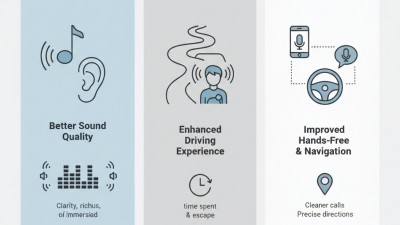
Upgrading your vehicle's audio experience is essential for any car enthusiast. Choosing the right car head unit can make all the difference. Expert Tom Parker, a well-regarded figure in the automotive audio industry, emphasizes, "The car head unit is the heart of your sound system." He highlights its importance in delivering clarity and performance.
When selecting a car head unit, consider features like Bluetooth connectivity, sound quality, and user interface. Each option can vastly change how you enjoy music and navigation. An outdated model may lack crucial functionalities, resulting in frustration.
Pay attention to compatibility with your vehicle and personal preferences. The market is filled with options that can overwhelm. However, doing detailed research and understanding your needs is key. Choosing the right car head unit means more than just aesthetics; it’s about enhancing your driving experience and connecting more deeply with your favorite tunes.

Understanding Your Vehicle's Compatibility with Head Units
When selecting a head unit, vehicle compatibility is crucial. Many modern cars have specific wiring and size requirements. Measure your existing unit carefully. Check if your dash can accommodate a new head unit. Some models might necessitate additional kits or adapters. This can complicate installations significantly.
Consider features beyond size and wiring. Think about connectivity options. Some vehicles have limitations on Bluetooth or USB compatibility. Ensure the head unit supports your smartphone and preferred apps. Installing a unit without verifying these details can lead to frustration. You might end up with an incompatible device, which is disheartening.
Research your vehicle’s make and model before making a purchase. User forums can provide real-life insights into common issues. Many drivers share similar problems and solutions that can guide your choice. It’s essential to be thorough, as missing details may lead to unnecessary complications. Even experienced enthusiasts miss critical information sometimes, so take your time.
How to Choose the Best Car Head Unit for Your Vehicle?
| Feature |
Description |
Importance Level |
| Size Compatibility |
Ensure the head unit fits the dash cutout size of your vehicle. |
High |
| Connectivity Options |
Check for USB, Bluetooth, and auxiliary inputs for external devices. |
Medium |
| Audio Quality |
Consider features that enhance sound such as equalizers and DSP. |
High |
| User Interface |
Look for a user-friendly interface that is easy to navigate while driving. |
Medium |
| Features & Add-ons |
Check for additional features like navigation, voice control, and touchscreen. |
Low |
| Budget |
Consider the overall cost and value for features offered. |
High |
Key Features to Consider in a Car Head Unit Selection
Choosing the right car head unit can transform your driving experience. When selecting, consider essential features like audio quality, connectivity options, and user interface.
Audio quality is crucial. Look for head units that support high-resolution audio formats. Clarity and depth in sound can make a significant difference. Check for built-in amplifiers and EQ settings for better control. In terms of connectivity, Bluetooth and USB ports are standard. Compatibility with smartphones allows you to access your playlists easily.
Tips: Test the user interface before buying. A complex system can be distracting while driving. Look for clear displays and intuitive controls. Ensure that the head unit fits your vehicle's dash for seamless integration. Sometimes, a larger screen may seem appealing but might cause issues in smaller spaces.
Don’t overlook the installation process. Some units require professional help, adding to the overall cost. A poorly installed head unit can lead to problems down the road. Choose wisely for a hassle-free journey.
Evaluating Sound Quality: Importance of DAC and Amplifier Power
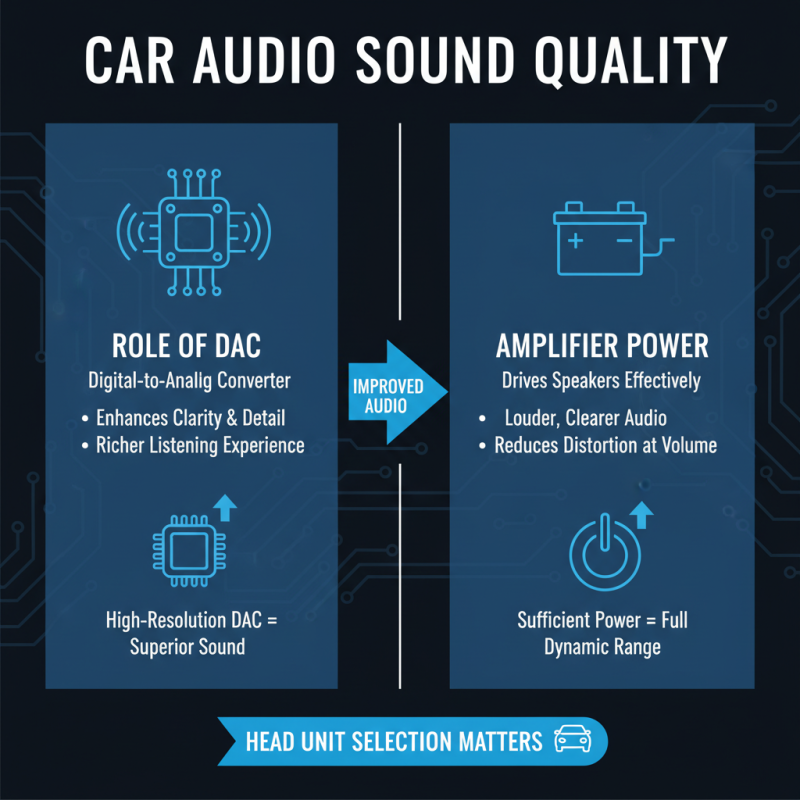
When evaluating car head units, sound quality is crucial. The DAC (Digital-to-Analog Converter) plays a significant role in sound clarity. A quality DAC enhances audio details, providing a richer listening experience. Reports show that units with a high-resolution DAC can produce superior sound. The difference can be striking for audiophiles.
Amplifier power also matters. It determines how loud and clear the sound will be at higher volumes. Many models feature amplifiers ranging from 20 to 50 watts per channel. Studies indicate that units with higher power output tend to have a cleaner sound at maximum levels. Users often overlook the importance of matching DAC and amplifier capabilities, leading to subpar audio.
Some may think that more power is always better, but this isn't always true. In some cases, more watts can introduce distortion. Sound quality relies on a balance between DAC quality and amplifier strength. Ignoring this can result in dissatisfaction. Making informed choices can significantly improve your driving experience.
Exploring Connectivity Options: Bluetooth, USB, and Smartphone Integration
When choosing a car head unit, connectivity options play a crucial role. Bluetooth connectivity allows for easy pairing with smartphones. It enables hands-free calling and music streaming, an essential feature for safe driving. Many newer models also support voice commands, reducing the need to fumble with your device.
USB connections offer another level of convenience. You can directly connect your phone or USB drive, allowing for faster music access without draining your phone’s battery. It’s ideal for long trips with extensive playlists. However, not all USB options are created equal. Some units may support only specific file formats.
Consider smartphone integration features. Many head units offer Apple CarPlay or Android Auto. These systems provide seamless access to apps, enhancing navigation and media utilization. It’s essential to check compatibility with your phone before purchasing, as not every unit supports all models or apps.
Tip: Always read user reviews for real-life experiences. They can reveal strengths and weaknesses you might overlook. Maintaining a flexible mindset can also help. Sometimes, the perfect fit requires adjustment and compromise.
Assessing User Interface and Ease of Use for Enhanced Driving Safety
When choosing a car head unit, user interface matters significantly. A simple, intuitive layout can enhance driving safety. Drivers need to access navigation and music without distraction. Complicated menus can lead to confusion. A clean display with clear icons is essential.
Consider touch responsiveness. Some screens lag, making it frustrating to use. Drivers often appreciate tactile buttons for vital functions. They can control settings without looking at the screen. Voice control is helpful too. But it isn't flawless. Occasionally, the system misunderstands commands, leading to unnecessary interruptions.
Test different units, if possible. Place yourself in various scenarios. How easy is it to adjust the volume while driving? Can you change the station effortlessly? Take notes. Each unit has strengths and weaknesses. Reflect on your preferences. Your choices can significantly impact your daily driving experience.