How to Choose the Best Car Audio Speakers for an Amazing Sound Experience
When it comes to enhancing your driving experience, one of the most impactful upgrades you can make is to invest in high-quality car audio speakers. The right set of speakers can transform your vehicle into a mobile concert hall, providing crystal-clear sound and deep, resonant bass that makes every drive more enjoyable.
However, with the vast array of options available on the market, choosing the best car audio speakers can feel overwhelming.
Factors to consider include speaker type, size, power handling, and frequency response, each playing a crucial role in determining the overall sound quality. Whether you’re a casual listener or a dedicated audiophile, understanding these components is key to making an informed decision.
In this guide, we will explore the various features to look for and the questions to ask yourself when selecting car audio speakers, helping you to find the perfect match for your musical tastes and vehicle specifications.
Prepare to elevate your sound experience and enjoy your favorite tunes like never before.
Understanding the Basics of Car Audio Speakers
When selecting car audio speakers, it's essential to have a solid understanding of the basic components that contribute to an exceptional sound experience. Car audio speakers typically come in two main types: coaxial and component. Coaxial speakers, also known as full-range speakers, combine multiple elements, such as the woofer and tweeter, into a single unit, making them an ideal choice for those who want simplicity and space-saving options. On the other hand, component speakers separate these elements, allowing for more precise sound reproduction and greater control over the audio quality. This separation often results in superior sound clarity and a richer auditory experience.
Another critical factor to consider is the speaker's sensitivity rating, measured in decibels (dB). This rating reflects how effectively a speaker converts power into volume. A speaker with higher sensitivity requires less power to produce the same sound level as a lower sensitivity speaker, making it more efficient, especially in vehicles with lower power systems. Additionally, taking note of the frequency response range helps in selecting speakers that can reproduce the full spectrum of sound. By understanding these basics, you can make an informed decision when choosing car audio speakers that will elevate your driving experience with outstanding sound quality.
How to Choose the Best Car Audio Speakers for an Amazing Sound Experience - Understanding the Basics of Car Audio Speakers
| Speaker Type |
Power Handling (Watts) |
Frequency Response (Hz) |
Sensitivity (dB) |
Price Range ($) |
| Coaxial Speakers |
60 - 400 |
40 - 20,000 |
87 - 95 |
50 - 200 |
| Component Speakers |
80 - 500 |
30 - 25,000 |
85 - 98 |
100 - 400 |
| Subwoofers |
150 - 1,500 |
20 - 200 |
85 - 95 |
75 - 500 |
| Full Range Speakers |
50 - 300 |
40 - 20,000 |
85 - 92 |
30 - 150 |
Types of Car Audio Speakers and Their Features
When choosing the best car audio speakers, it's essential to understand the different types available and their unique features. Car audio speakers typically fall into a few main categories:
coaxial,
component, and
subwoofers.
Coaxial speakers, also known as full-range speakers, combine multiple speaker elements into one unit, making them a popular choice for an all-in-one solution. They offer decent sound quality and are easier to install, making them suitable for those who want a straightforward upgrade.
Component speakers, on the other hand, separate the various elements such as the woofer, tweeter, and crossover. This separation allows for more precise sound reproduction and customization, catering to audiophiles who seek a richer audio experience. In addition to these, subwoofers are designed specifically to handle low-frequency sounds, adding depth to your car's audio system that can enhance overall enjoyment, especially for bass lovers.
When selecting speakers, consider the specifications that matter most to your listening habits. Pay attention to factors such as
sensitivity ratings,
power handling, and
frequency response.
A higher sensitivity rating means the speaker requires less power to produce sound, which can be beneficial if you plan to use a lower-powered amplifier. Additionally, ensure that the speakers fit well within your vehicle's available space for optimal installation.
Key Factors to Consider When Choosing Speakers
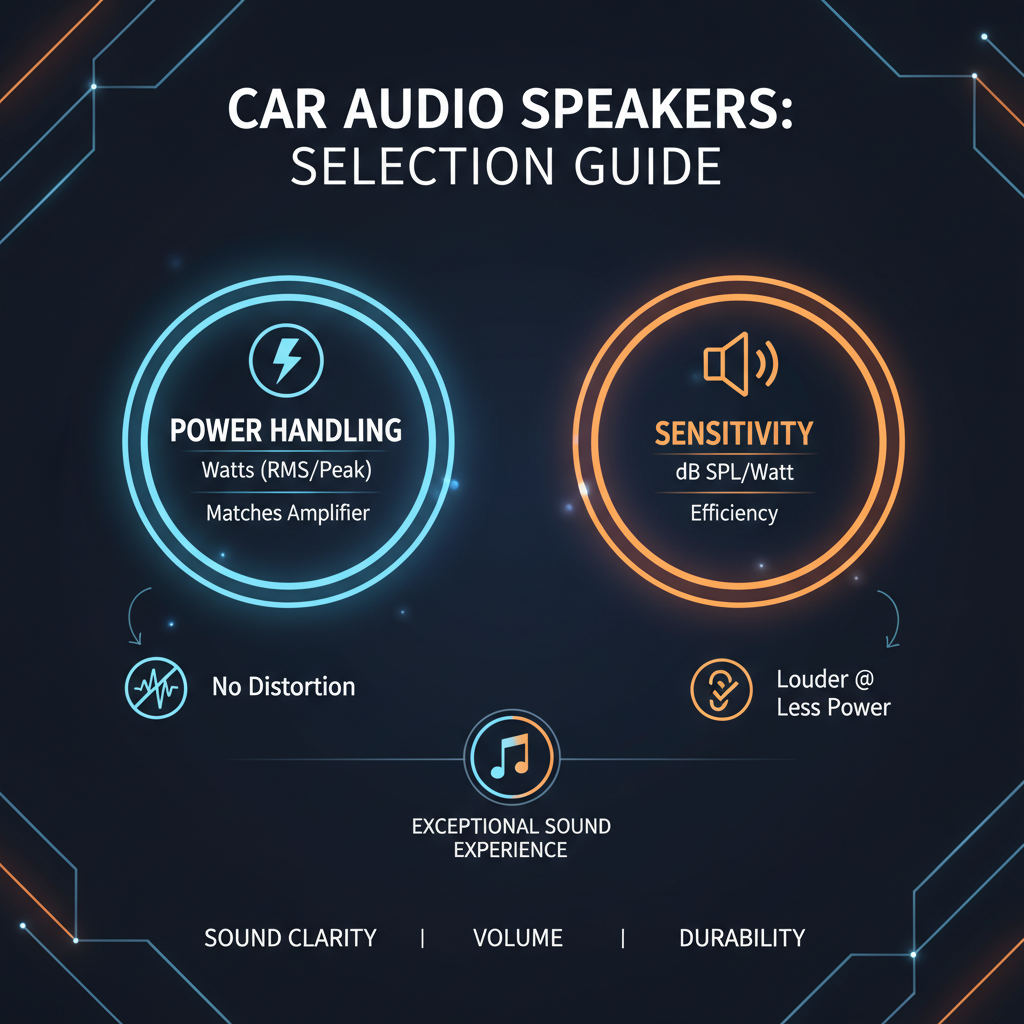
When selecting car audio speakers, several key factors should guide your decision to ensure an exceptional sound experience. Firstly, consider the power handling capability of the speakers, typically measured in watts. Choosing speakers with an appropriate power rating will ensure they perform well without distortion. Additionally, the sensitivity rating affects how efficiently speakers convert power into sound. Higher sensitivity means better sound output at lower power, an essential aspect for sound clarity and volume.
Tips: Always check the compatibility of the speakers with your car's audio system. If your head unit has limited power, opt for speakers with higher sensitivity for optimal performance.
Secondly, speaker size also plays a crucial role in sound quality. Larger speakers usually offer better bass response, while smaller ones may deliver clearer mids and highs. It's essential to match the speaker size with your car's available spaces to maximize sound quality without sacrificing aesthetics.
Tips: When upgrading, consider a component speaker system for superior sound quality, as it separates the woofer and tweeter for improved audio performance.
How to Match Speakers with Your Car's Audio System
When it comes to enhancing your car's audio experience, matching speakers with your vehicle's existing audio system is crucial. According to a study by the Consumer Electronics Association, nearly 76% of car audio enthusiasts believe that the clarity of sound can significantly improve their overall driving experience. Therefore, it is essential to consider factors such as speaker sensitivity, impedance, and power handling when selecting new speakers.
First, consider the sensitivity rating of potential speakers. This metric indicates how efficiently a speaker converts power into sound; a higher sensitivity rating (typically above 90 dB) ensures that your speakers will perform well even with the factory-installed head unit. Additionally, impedance plays a vital role in ensuring compatibility. Most car audio systems operate at 4 ohms, but some head units can handle lower or higher impedance. Always check your audio system's specifications before making purchases. Lastly, power handling is key; choose speakers that can handle more power than your amplifier provides to prevent distortion and ensure longevity. By meticulously matching these parameters, you can achieve an incredible sound experience in your car.
Tips for Installation and Optimization of Car Speakers
When installing car audio speakers, optimizing both the hardware setup and the software is crucial for achieving an exceptional sound experience. Ensuring that your speakers are mounted properly can significantly enhance sound quality. Research indicates that proper placement within the vehicle can boost sound clarity by as much as 30%, as it minimizes echoes and maximizes direct sound waves. Pay attention to the orientation and angles of the speakers; positioning them toward the listener’s location creates a more immersive experience.
In addition to hardware placement, software settings play a pivotal role in audio performance. Modern digital radio co-processors can support multiple channels, allowing for more refined sound decoding. Reports show that using advanced decoders can improve audio quality by up to 40%, particularly in environments with high interference. Adjust your receiver’s equalizer settings to tailor the sound to your preferences. Collaborating the correct installation techniques with these optimizations ensures a rich and dynamic sound experience while on the road.
Car Audio Speakers Performance Comparison
This chart compares different car audio speakers based on their frequency response range and sensitivity. A wider frequency response and higher sensitivity often indicate better sound quality and more efficient performance.