What is the Best Car Music System for Ultimate Sound Experience
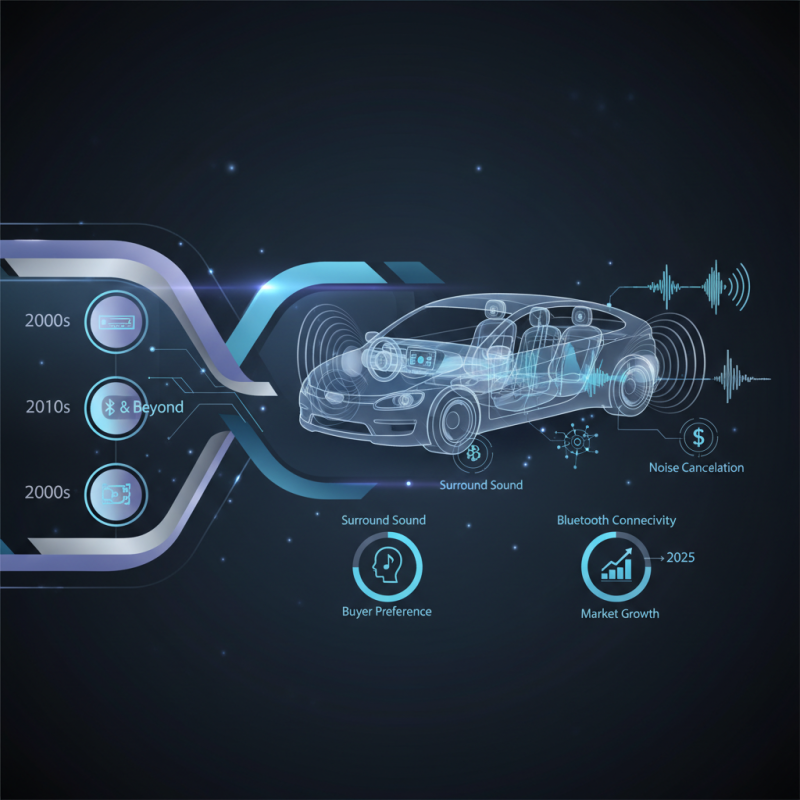
In today's automotive industry, the evolution of car music systems has become a focal point for enhancing the driving experience. As per a recent report by Statista, the global car audio market is projected to reach approximately $16 billion by 2025, reflecting a growing consumer interest in high-quality sound solutions. This trend underscores the importance of integrating advanced audio technologies into vehicles, transforming car interiors into personalized soundscapes.
The demand for superior sound performance is also echoed in a survey conducted by Nielsen that indicates over 60% of car buyers consider the quality of the music system to be a significant factor in their purchasing decisions. With innovations such as surround sound, noise cancellation, and Bluetooth connectivity becoming standard, modern car music systems are not only about listening to music; they are about creating an immersive auditory experience. As we explore the best options available in the market, understanding the essential features that contribute to an ultimate sound experience will guide consumers in selecting the perfect car music system that aligns with their desires and driving habits.
The Importance of Sound Quality in Car Audio Systems
The importance of sound quality in car audio systems cannot be overstated, as it significantly enhances the overall driving experience. A well-designed audio system allows listeners to enjoy their favorite music with clarity and richness, transforming the vehicle into a personal concert hall. High-fidelity sound reproduction ensures that every note, beat, and vocal nuance is delivered as the artist intended, providing an immersive listening experience that minimizes distractions on the road.
Moreover, investing in superior sound quality contributes to the overall enjoyment and satisfaction of vehicle occupants. Whether it’s a soothing melody during a long commute or energetic tracks on a weekend drive, the right audio system amplifies the emotional connection to the music. In addition, high-quality components and setups can compensate for road noise, ensuring that each listen remains engaging and vibrant. Ultimately, the quest for an ultimate sound experience in a car goes beyond mere volume; it is about clarity, balance, and the capacity to evoke emotions through music while navigating the journey ahead.
Key Components of a High-Quality Car Music System
When it comes to achieving an ultimate sound experience in your car, the key components of a high-quality car music system cannot be overlooked. A recent industry study indicates that approximately 60% of car owners prioritize audio quality when purchasing vehicles, highlighting the importance of an exceptional sound system. At the core of a superior setup lies the head unit, which serves as the brain of the audio system. A feature-rich head unit enables functionalities like Bluetooth connectivity, high-resolution audio support, and customizable equalization settings, essential for fine-tuning sound to individual preferences.
Another crucial aspect is the speakers—specifically, their type and placement within the vehicle. Research reveals that well-placed coaxial speakers can significantly enhance soundstage and clarity, outperforming standard factory-installed options. For those seeking a more immersive experience, components speakers, which include separate woofers and tweeters, provide a broader frequency range and better overall sound quality. Moreover, a quality amplifier can make a notable difference by supplying clean power to the speakers, reducing distortion and enhancing dynamic range. As reported by the Car Audio Design report, upgrading to an amplifier can improve sound performance by up to 40%, proving that these components play a vital role in creating a truly satisfying car audio experience.
What is the Best Car Music System for Ultimate Sound Experience - Key Components of a High-Quality Car Music System
| Component |
Description |
Key Features |
Importance |
| Head Unit |
The main control panel that manages audio sources and settings. |
Touchscreen, Bluetooth, USB/AUX inputs |
Central command for audio system, affects sound source compatibility |
| Speakers |
Devices that convert electrical signals into sound. |
Component, coaxial, full-range options |
Crucial for sound quality, clarity, and volume |
| Amplifier |
Boosts audio signals for better sound output. |
Power handling, multi-channel options |
Enhances sound coverage and clarity, especially at high volumes |
| Subwoofer |
Produces low-frequency sounds for richer audio depth. |
Size, power rating, enclosure type |
Adds bass response, improving overall sound experience |
| Sound Deadening |
Materials used to minimize unwanted noise in the vehicle. |
Installation areas, material types |
Essential for clearer sound and reduced exterior noise interference |
Comparative Analysis of Leading Car Audio Brands and Models
When it comes to achieving the ultimate sound experience in cars, the choice of audio system plays a pivotal role. Recent studies indicate that high-fidelity sound systems can significantly enhance driving experiences, leading to increased satisfaction among users. A report from the Consumer Technology Association indicates that 44% of drivers consider audio quality as a top priority when choosing a car. This highlights the demand for superior sound clarity, deep bass, and overall immersive audio performance.
In conducting a comparative analysis of leading car audio systems, key features such as speaker quality, amplification, and connectivity options are paramount. In a survey by an automotive audio research firm, 62% of vehicle owners reported that they prioritize systems with advanced connectivity options, including Bluetooth and smartphone integration. Additionally, frequency response ranges and total harmonic distortion metrics are essential in determining sound quality; systems capable of delivering a frequency response from 20Hz to 20kHz with minimal distortion are favored. This emphasis on audio specifications suggests that consumers are increasingly educated about the technical aspects of sound systems when making their purchasing decisions, driving brands to innovate continually to meet this growing demand for superior sound in vehicles.
Evaluating the Impact of Speaker Placement on Sound Experience
When it comes to achieving the ultimate sound experience in a car, the placement of speakers plays a crucial role. According to a report from the Acoustical Society of America, ideal speaker placement can enhance sound clarity and spatial dimension, significantly improving the listener's overall experience. They emphasize that sound waves interact with the vehicle’s interior surfaces, which means that both the location and angle of the speakers can influence how sound is perceived. For instance, positioning speakers at ear level can help to create a more immersive soundstage, reducing the chances of sound distortion that often occurs with unoptimized setups.
Further research indicates that the average car audio system, regardless of its overall quality, can have its sound potential dampened by improper speaker placements. Data from sound engineering studies suggest that systems featuring properly aligned speakers can have up to a 30% increase in perceived audio quality. This is particularly evident in bass response; subwoofers placed in the trunk can provide a more resonant low end, while front-mounted speakers enhance mid and high frequencies, creating a more balanced audio landscape.
Understanding these dynamics is key for anyone looking to elevate their in-car audio experience, as it underlines the importance of thoughtful design in sound system layout.
Latest Technological Innovations in Car Audio Systems
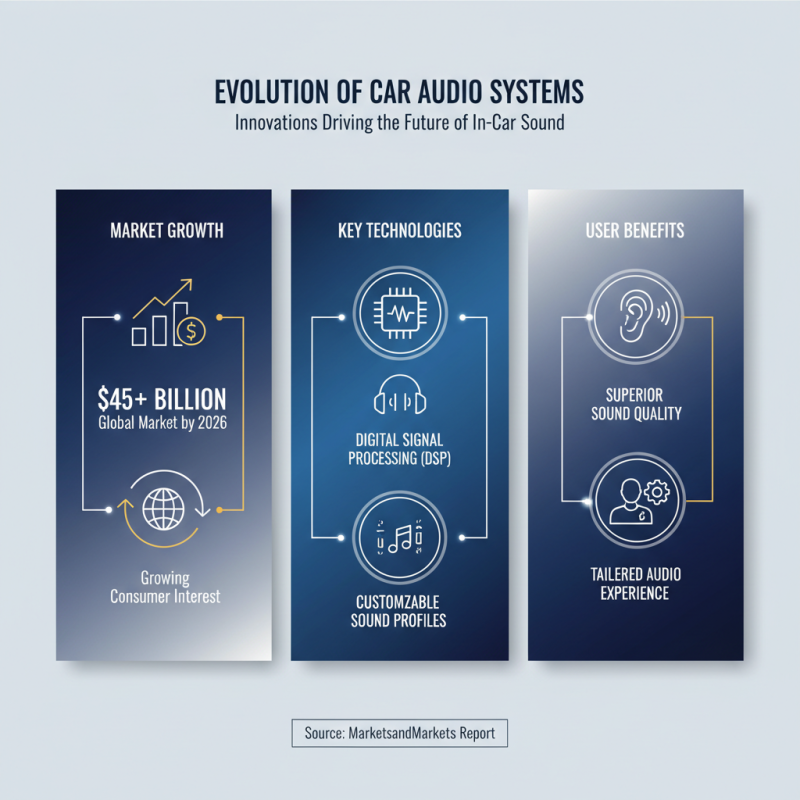
In recent years, car audio systems have seen a significant evolution, driven by cutting-edge technological innovations that aim to enhance the in-car listening experience. According to a report by MarketsandMarkets, the global automotive audio system market is projected to reach over $45 billion by 2026, highlighting a growing consumer interest in superior sound quality and advanced features. Modern systems now integrate digital signal processing (DSP), active noise cancellation, and customizable sound profiles, allowing users to tailor their audio experience to their personal preferences.
One exciting development in car audio technology is the implementation of 3D sound technology, which creates an immersive auditory environment that replicates a live concert experience. Additionally, advancements in wireless audio streaming, such as low-latency codecs and high-definition audio formats, allow for seamless integration with smartphones and other devices. This trend emphasizes convenience without sacrificing quality, a crucial factor as consumers increasingly prioritize connectivity while on the road.
**Tips:** To truly maximize your car's audio system, consider investing in high-quality audio files and utilizing proper speaker placement to enhance sound clarity. Furthermore, regularly updating your system’s software ensures you are benefiting from the latest enhancements and features. Lastly, experimenting with different equalizer settings can help create the perfect balance suited to your music preferences.