What Are the Best Audio Installation Systems in 2026?

Choosing the best audio installation system in 2026 is not simply a matter of buying the newest speakers. Room acoustics, cable routes, control options, and future expansion all shape the result. A crisp ceiling speaker can sound thin in a hard, echoing room. Small details matter.

AVIXA’s 2024 Industry Outlook and Trends Analysis projected global professional audiovisual revenue to grow from about $325 billion in 2024 to $402 billion by 2029. That wider market includes many technologies, not audio alone, but it signals continued investment in integrated AV. CEDIA’s 2024 Smart Home Technology Report offers another useful lens, examining technology adoption and professional installation in connected homes. Together, these reports help frame a practical question: which systems deliver dependable performance in real spaces, rather than impressive specifications on a product page?

This guide compares audio installation options for homes, offices, hospitality venues, and other shared environments. It considers sound quality, system compatibility, setup complexity, maintenance, and value over time. Wired and networked systems each have trade-offs. No system wins everywhere. Even careful comparisons have limits: room measurements and installer experience can change the outcome. Use the recommendations as a starting point, then check product documentation and consult a qualified integrator for demanding projects.
What Are the Best Audio Installation Systems in 2026?

Understanding Audio Installation Systems and Their Main Uses

What Are the Best Audio Installation Systems in 2026?

Understanding Audio Installation Systems and Their Main Uses

An audio installation system is a planned network of speakers, amplifiers, signal processors, microphones, and controls. Unlike a portable speaker, it is designed to serve a particular space. A small meeting room may need clear speech from the front wall, while a café may need even background music across several seating areas. Different jobs, different layouts.

The system’s main use is reliable sound coverage. In a classroom, ceiling speakers can help distribute a teacher’s voice without forcing them to shout. In a shop, separate audio zones can keep music audible near the entrance without overwhelming the checkout counter. A processor can also balance levels, but it cannot fix every problem. Hard floors and glass walls still cause echoes. That matters.

Good planning starts with the room, not the equipment list. Measure the space, note ceiling height, and consider where people sit or move. Then test speech and music at realistic listening levels. A quick check from the doorway may miss a quiet corner behind shelving. Small details count. I would also leave room for adjustment; a layout that looks tidy on paper may sound uneven once furniture and people are present. Regular checks of connections, controls, and speaker performance help keep the system useful over time.

Comparing System Types for Homes, Businesses, and Public Spaces

The best audio installation depends on the room and its purpose. In homes, a stereo or compact distributed system suits focused listening and everyday use. Kitchens and hallways may need separate volume controls, since sound that feels pleasant in one room can overwhelm another. Small rooms differ.

Businesses often need zoned audio for meeting rooms, reception areas, and cafés. A public venue may need distributed loudspeakers, clear paging, and careful coverage across crowded or reverberant spaces. AVIXA’s 2024 Industry Outlook and Trends Analysis forecast global professional audiovisual revenue of $325 billion by 2029. That signals demand, not guaranteed sound quality; the report does not tell you how a specific room will perform. A tidy equipment plan can still miss the echo from glass walls.

Tips: Walk the space before choosing equipment. Note hard surfaces, seating, and noisy areas. Ask for measured coverage and speech intelligibility, not just a louder system. Leave room for adjustment after installation.

Audio Installation Systems in 2026: Comparing Common Configurations

Mono paging systems use one audio channel, while stereo music systems use two. Common 5.1 and 7.1 surround formats use five and seven main channels, respectively; the “.1” indicates a separate low-frequency effects channel. Channel count alone does not determine sound quality or coverage, and distributed systems can be designed with varying numbers of zones.

Evaluating Sound Quality, Compatibility, Coverage, and Cost

What Are the Best Audio Installation Systems in 2026?

Evaluating Sound Quality, Compatibility, Coverage, and Cost

A strong audio installation starts with the room, not the equipment list. Hard floors and bare walls can make voices sound sharp, while curtains and furniture absorb high frequencies. Listen at normal volume from several seats, not just beside the main speakers. Clear speech and even bass matter more than impressive volume. Small differences matter.

Compatibility deserves an early check. Confirm that the amplifier supports the speakers’ impedance and power requirements, and that source devices connect through available wired or wireless inputs. For multiroom setups, check whether rooms can play independently and whether network control works reliably through walls. A system that sounds excellent but drops connections is frustrating.

Coverage depends on room shape and speaker placement. A long, narrow space may need several lower-powered speakers rather than two loud ones. Ask for a layout showing listening zones, cable routes, and control points before installation. Then compare the full cost: equipment, labor, wiring, setup, and future repairs. The cheapest quote can omit useful details. I would still question any estimate that promises perfect sound without measuring the room; real spaces rarely behave that neatly.

Leading Audio Installation System Options in 2026

In 2026, the best audio installation system depends on the building, listening habits, and willingness to manage equipment. For whole-home coverage, a wired multiroom system offers steady playback and independent volume control in each room. Ceiling speakers can keep surfaces clear, while wall-mounted controls remain easy to reach near a kitchen entrance or bedside.

Wireless systems suit renovations where pulling cable would mean opening finished walls. They are quicker to adapt, but performance can suffer when signals pass through concrete or crowded networks. A hybrid setup often makes practical sense: wired speakers in the living room, wireless units in a study or guest room. It is not the neatest answer. It can be harder to maintain.

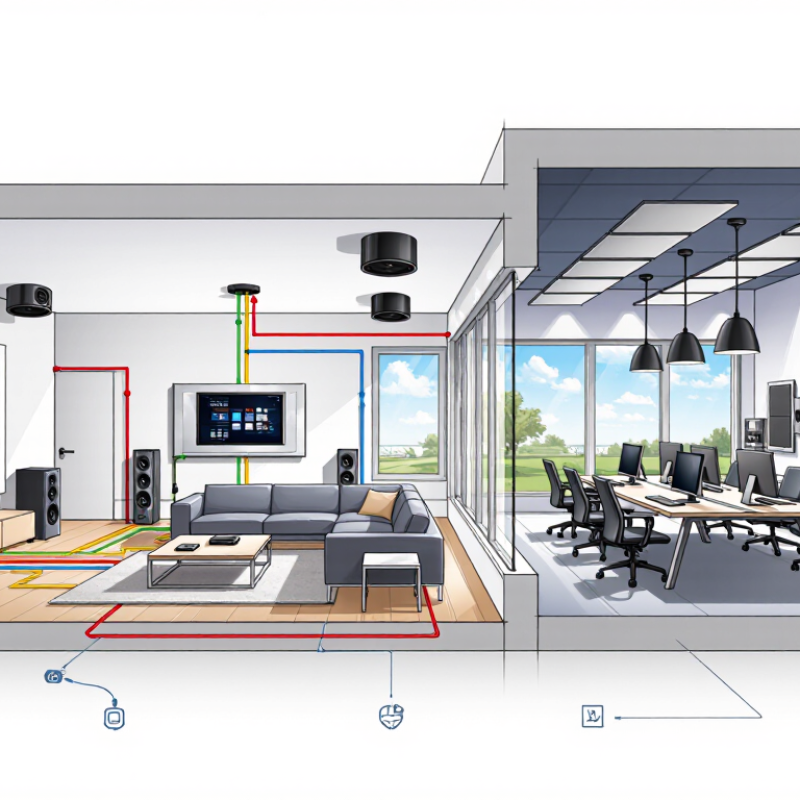
For larger homes, offices, or hospitality spaces, an audio matrix routes different sources to selected zones. Installers should check cable paths, amplifier capacity, ventilation, and future service access before choosing equipment. A rack packed into a warm cupboard may work on day one, then become a persistent headache. Room acoustics matter, too; hard floors and bare glass can make speech sound sharp. Ask for an on-site listening test, clear zone diagrams, and documented wiring. No system is perfect. A sensible design leaves room for adjustment after people have lived with it.

What Are the Best Audio Installation Systems in 2026? — Leading Audio Installation System Options in 2026

System Option Typical Configuration Best Suited For Common Connections Main Advantages Key Installation Considerations
Two-Channel Stereo Two speakers connected to a stereo amplifier or receiver; optional subwoofer. Small living rooms, listening rooms, offices, and straightforward music systems. Speaker cable; source connections may include HDMI, optical, coaxial, or analog inputs, depending on the equipment. Simple signal path, relatively modest wiring needs, and strong performance for music when speakers are positioned carefully. Plan speaker placement and listening position together. Keep left and right speaker distances and placement reasonably balanced.
5.1 Surround Sound Five main speaker channels plus one low-frequency-effects channel for a subwoofer. Home theaters and media rooms with a defined primary seating area. Speaker cable for passive speakers; HDMI is commonly used to carry multichannel audio from compatible sources to a receiver or processor. Provides front, center, and surround channels for movie and television sound without requiring overhead speakers. Allow for a center speaker near the display, suitable side or rear surround locations, and a subwoofer position that can be tested in the room.
7.1.4 Immersive Audio Seven bed-layer channels, one subwoofer channel, and four overhead or height channels. Dedicated theaters and larger media rooms where immersive sound and overhead effects are priorities. Speaker-level connections from an appropriately equipped receiver or processor; HDMI sources and display connections must support the intended audio formats. Adds height-channel playback to a surround layout, creating more spatially varied sound when compatible content is played. Requires more speaker locations, amplifier channels, and cable routes than a basic surround system. Ceiling construction and speaker placement can affect feasibility.
Distributed Multiroom Audio Multiple listening zones, each with speakers and either shared or independently selected audio sources. Homes, hospitality spaces, and other buildings needing sound in several rooms or areas. May use home-run speaker wiring to a central amplifier, local amplifiers, or network-based audio links, depending on the system design. Supports room-by-room coverage and can allow different sources or volume levels in separate zones. Define the number of zones and control points before installation. Account for cable pathways, network coverage where relevant, and amplifier capacity.
70V/100V Commercial Distributed Audio A constant-voltage amplifier feeding multiple loudspeakers, typically fitted with matching line transformers and selected power taps. Retail spaces, offices, schools, restaurants, and other large areas needing background music or paging. Two-conductor speaker runs are commonly used; amplifier, transformer, and speaker ratings must be compatible. Allows many speakers to be connected across long cable runs, making it practical for broad coverage in commercial spaces. Sum the selected speaker tap wattages and provide suitable amplifier headroom. Use the correct voltage system and follow applicable electrical and fire-safety requirements.
Conference Room Audio with DSP Microphones, loudspeakers, and a digital signal processor; the system may also connect to a video-conferencing platform. Meeting rooms, training rooms, and presentation spaces where speech intelligibility and reliable calls are important. May include balanced audio connections, USB or network audio, control wiring, and connections to conferencing equipment. Digital signal processing can support functions such as acoustic echo cancellation, equalization, and automatic or manual level control. Microphone and loudspeaker placement, room acoustics, and correct echo-cancellation configuration are essential. Coordinate audio, video, and control requirements early.

Choosing and Planning a System for Your Space

Choosing an audio installation system in 2026 starts with the space, not a speaker count. Measure the room and note hard surfaces, windows, ceiling height, and likely listening positions. Stand near the back wall and listen for echo. Small rooms can make strong bass feel muddy, while open layouts may need more even coverage.

Decide what the system must do each day. A meeting room may need clear speech at every seat; a café may need gentle background sound without a loud corner. Sketch speaker locations and cable routes before choosing equipment. Keep controls easy to reach, and leave access for future repairs. Hidden wiring looks tidy, but only when installers can still service it.

Set aside time for a site survey and a listening test. Ask a qualified installer to explain coverage, power needs, and how the system will connect to existing equipment. Walk the room during testing. Listen from the doorway, the farthest seat, and beneath any ceiling speakers. That matters. A plan can look perfect on paper and still miss a noisy air vent or an awkward volume control. Leave some budget for adjustments; real rooms have surprises.