Global buyers entering 2026 face a practical question: which Wired Push Button type fits the machine, environment, and maintenance plan? Industrial controls are becoming more connected, yet physical commands remain essential. The International Federation of Robotics reported 541,302 industrial robot installations worldwide in 2023. That volume reflects continued demand for dependable operator interfaces near production equipment.
This guide examines momentary push buttons, maintained-contact buttons, illuminated versions, selector combinations, and emergency-stop designs. It also considers metal and plastic housings, contact configurations, ingress protection, operating temperature, and panel-mount depth. IEC 60947-5-1 provides an important reference for low-voltage control switches. IEC 60947-5-5 supports emergency-stop requirements. These standards help buyers compare products beyond appearance.
Specifications can mislead.
A bright button may look suitable for a dusty workshop, but its IP rating, seal quality, and terminal design matter more. MarketsandMarkets’ industrial control and factory automation research identifies automation expansion as a continuing market driver through this decade. Rockwell Automation’s State of Smart Manufacturing reports also emphasize reliability, workforce efficiency, and connected production priorities. However, many reports group push buttons within broader automation categories. They do not always isolate wired devices. That limitation deserves attention.
The best choice is rarely the most advanced-looking model. A food-processing line may need washable stainless steel hardware. A compact control cabinet may require shallow mounting depth. A warehouse conveyor may prioritize tactile feedback and quick replacement. This overview compares leading Wired Push Button types through real installation conditions, recognized standards, lifecycle value, and global sourcing considerations. Some recommendations will remain application-dependent. That is the honest part.
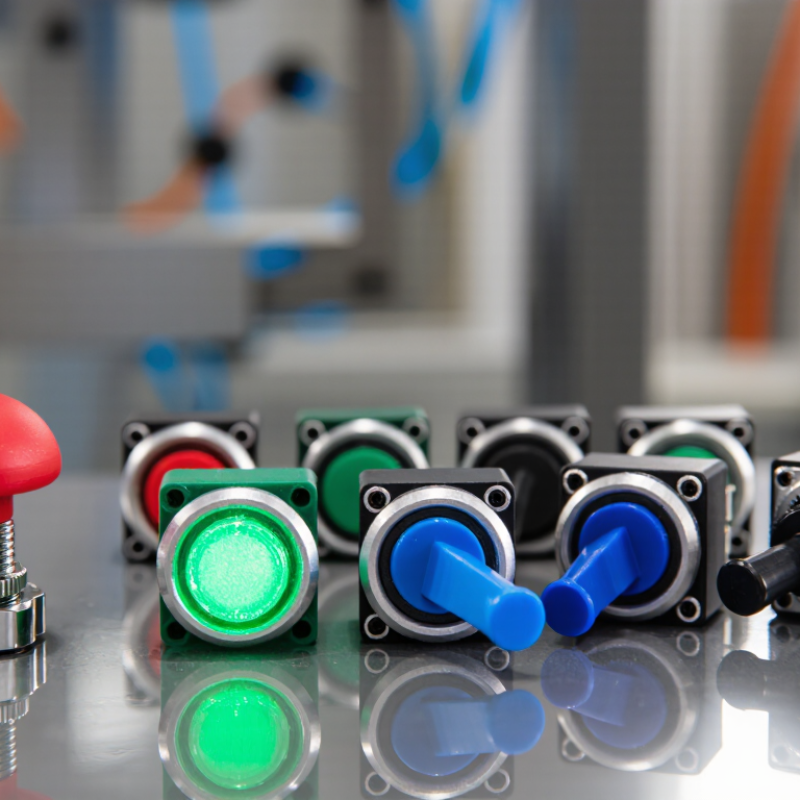
2026 Top Wired Push Button Types for Global Buyers?
Wired Push Button Basics and Key Operating Principles
Wired push buttons convert physical pressure into an electrical control signal. Inside, an actuator moves a contact block. The circuit then opens or closes. Common types include momentary, maintained, normally open, and normally closed versions. Momentary buttons return by spring action. Maintained buttons stay latched until pressed again.
A 2024 Future Market Insights assessment estimates the global push-button switch market at about USD 1.4 billion. It projects roughly 5.5% annual growth through 2034. This figure includes several switch categories, not only industrial panel buttons. IEC 60947-5-1 provides important requirements for low-voltage control devices. Buyers should check rated voltage, current, contact material, mechanical life, and environmental protection. IP ratings matter in dusty workshops or washdown areas.
The neat theory can fail.
In field inspections, loose terminals often cause intermittent signals. Excessive force can also shorten actuator life. A button may feel solid but still have worn contacts. This is where practical testing matters more than catalogue language. Use a multimeter to verify continuity before installation. Then test the complete circuit under its real load.
Tips: Match the contact arrangement to the control logic. Confirm AC or DC compatibility. Leave wiring space for inspection. Record the installation date. Recheck terminals after initial machine vibration. Some specifications look precise, but they still need verification on site.

2026 Top Wired Push Button Types for Global Buyers
Main Types of Wired Push Buttons for Different Applications
Wired push buttons differ by contact action, housing design, and operating environment. Choosing the right type starts with the machine’s actual workflow.
Momentary push buttons activate a circuit only while pressed. They suit start commands, jog controls, door releases, and test panels. Maintained push buttons change state after pressing and remain active. They work well for lights, fans, and simple power selection. The difference matters.
Illuminated push buttons add a visible status signal around or inside the actuator. They help operators notice running, standby, or fault conditions in dim workshops. For outdoor cabinets, buyers should examine sealing, cable entry, and resistance to dust and moisture. A bright lamp cannot fix a weak enclosure.
Emergency stop buttons use a large, easy-to-hit actuator and usually require a deliberate reset. Their wiring and safety function must match the machine’s risk assessment and applicable regional requirements. Selector-style push buttons can reduce accidental operation, while guarded or recessed versions protect controls from unintended contact.
In panel projects, I have seen buyers focus on price and overlook contact ratings. That mistake can shorten service life. Check voltage, current, switching frequency, terminal layout, mounting size, and temperature range. Verify required approvals for the destination market. There is no universal best type. A button that feels perfect during testing may become awkward with gloves, vibration, or repeated use. Test the real conditions before ordering large quantities.
| Wired Push Button Type | Switching Action | Common Contact Arrangement | Typical Applications | Mounting and Operator Style | Typical Protection Options | Key Buying Considerations |
|---|---|---|---|---|---|---|
| Momentary Normally Open Push Button | Contacts close only while the button is pressed and reopen when released. | NO Single-circuit switching is common; changeover versions are also available. | Start commands, door-open requests, reset inputs, test circuits, control panels and machine interfaces. | Panel-mount or surface-mount; flat, raised, flush or colored actuator. | Front-panel sealing commonly available from basic indoor protection to IP65/IP67-rated designs, depending on construction. | Check contact rating, terminal type, panel cutout diameter, actuator travel and required operating force. |
| Momentary Normally Closed Push Button | Contacts remain closed at rest and open while the button is pressed. | NC Often used as an interrupt or stop signal. | Stop inputs, inhibit circuits, safety interlocks, operator-presence controls and fault-reset logic. | Panel-mount designs with flush or raised actuators; compatible with screw, solder or quick-connect terminals. | Sealed versions are available for dusty, wet or washdown-prone control environments. | Confirm the normal-state logic, contact opening behavior, electrical load and compatibility with the control circuit. |
| Maintained or Latching Push Button | One press changes the state and the button remains in that state until pressed again or manually released. | NONCChangeover | Power selection, function enable/disable, lighting control, mode selection and simple equipment controls. | Push-push mechanism, locking actuator or alternate-action design; panel mounting is common. | Indoor and sealed panel versions are available; protection depends on the actuator and housing design. | Verify whether the device is mechanically latching or electrically latched, and check its visual state indication. |
| Illuminated Push Button | May be momentary or maintained; the lamp or LED provides status or command indication. | NONCChangeover | Operator panels, process equipment, transportation controls, alarms, status indication and start/stop stations. | Round or square panel-mount body with LED or lamp illumination; colored lenses are commonly used for status coding. | Sealed panel versions are available; light source options include LED modules and replaceable lamps. | Specify illumination voltage, color, brightness, lens symbol, contact rating and whether the light is independent or contact-controlled. |
| Emergency-Stop Push Button | Pressing the actuator causes a maintained stop condition; reset normally requires twist release, key release or pull release. | NCPositive-opening contacts Auxiliary NO contacts may also be included. | Industrial machinery, production lines, conveyors, packaging equipment, laboratory systems and material-handling equipment. | Usually a large red mushroom actuator with a contrasting yellow mounting background; panel or enclosure mounting. | Many industrial models offer high front-panel ingress protection; the complete installation must be assessed. | Check applicable machinery-safety requirements, reset method, contact blocks, monitoring arrangement and protection against accidental reset. |
| Mushroom-Head Push Button | Can be momentary or maintained; the enlarged actuator is designed for quick operation. | NONCChangeover | Large-panel controls, industrial machines, accessibility-focused interfaces and high-visibility operator commands. | Large round actuator, commonly panel-mounted; available in various colors and operating profiles. | Rugged and sealed versions are available for industrial environments. | Do not treat every mushroom-head button as an emergency stop; verify the actual safety function, reset behavior and approvals. |
| Key-Reset or Key-Selector Push Button | Momentary operation or maintained switching controlled by a removable key. | NONCChangeover | Restricted-access functions, service modes, equipment enable controls, security panels and maintenance operations. | Panel-mount body with a key-operated barrel or key-release actuator. | Front-panel sealing and dust-resistant constructions are available for industrial installations. | Consider key retention, number of key positions, access control requirements, contact configuration and replacement-key management. |
| Piezoelectric Push Button | Electronic switching is triggered by pressure on a solid-state piezoelectric surface; there is typically no mechanical contact movement. | Electronic output May use a pulse, maintained signal or integrated controller interface. | Public-use equipment, medical interfaces, ticketing systems, outdoor controls, clean environments and high-cycle applications. | Flush panel-mount surface with a low-profile actuator; suitable for frequent operation. | Highly sealed constructions, including IP-rated versions, are commonly available because the actuator can be manufactured without a moving contact mechanism. | Check required interface electronics, supply voltage, output type, activation force, response time and compatibility with the control system. |
| Foot Switch with Wired Push Button Mechanism | Momentary or maintained switching operated by foot pressure instead of hand pressure. | NONCChangeover | Machine tools, medical equipment, sewing and fabrication equipment, test benches and hands-busy workstations. | Floor-mounted enclosure with a guarded or exposed pedal; cable exits through a strain-relieved connection. | Heavy-duty housings and splash-resistant versions are available; environmental protection varies by enclosure. | Evaluate pedal force, guard requirements, cable length, mechanical durability, contact rating and operator safety. |
| Note: Electrical ratings, panel cutout sizes, terminal styles, operating forces and IP ratings vary by construction and application. Buyers should verify the exact datasheet, wiring diagram and applicable safety requirements before selection. | ||||||
For global buyers, wired push buttons should be compared by contact behavior, electrical rating, and material—not appearance alone. A normally open contact closes only during pressing, while a normally closed contact opens the circuit. Momentary action suits machine commands. Latching action suits maintained operation. SPST is simple; SPDT supports circuit selection. Small differences matter.
Check ratings under the actual load. A button rated for 5 A resistive service may perform poorly with motors, solenoids, or LED drivers. Compare AC and DC values separately. Review voltage, inrush current, switching cycles, and derating temperature. IEC 60947-5-1 provides a useful reference for low-voltage control devices. It does not replace application testing. A datasheet number is not a guarantee.
Material choice affects both reliability and cost. Silver-based contacts handle general switching loads well. Gold-plated contacts suit low-current signals, where oxidation can become troublesome. Copper alloys support conductivity, while polyamide bodies provide practical insulation. Stainless steel or aluminum bezels improve impact resistance, but enclosure sealing still needs an IP rating. Deloitte’s 2024 Smart Manufacturing and Operations Survey found that 86% of manufacturers view smart manufacturing as important to competitiveness. That pressure makes dependable controls more valuable. Field audits often find mismatched ratings, especially when buyers copy AC specifications into DC projects. That shortcut deserves another look. Suppliers should request load type, ambient temperature, expected cycles, and panel ingress requirements before confirming a part.
Wired push buttons come in momentary, maintained, illuminated, and emergency-stop forms. Each type supports a different control function. Momentary buttons return after release, while maintained buttons stay active until switched back. Illuminated versions help operators locate controls in dim panels. Choose based on voltage, current, enclosure rating, and operating environment.
Installation experience shows that small details matter. Before drilling, isolate the power supply and verify zero voltage with a suitable meter. Mark the panel cutout carefully, because a loose opening can reduce protection against dust and moisture. Use the recommended wire size, secure terminals firmly, and keep signal wires separated from high-power conductors. Follow local electrical rules and the device’s technical documentation.
Do not guess terminal functions. A qualified electrician should confirm polarity, grounding, insulation, and overload protection before energizing the circuit. Test the button repeatedly under normal and fault conditions. Check that the controlled machine stops safely when required. A loose terminal may work during commissioning, then heat under load. That mistake is easy to miss. I have seen neat panels fail because cable glands were tightened unevenly. Maybe the installation looked professional. It was not fully reliable. Recheck every connection after the first operating cycle, especially where vibration, humidity, or temperature changes are expected.
2026 Top Wired Push Button Types for Global Buyers
Selecting the right wired push button starts with the machine, not the catalog. Standard momentary buttons suit operator commands, while maintained buttons fit simple start-stop isolation. Illuminated versions improve visibility around dusty panels or low-light workstations. Emergency-stop devices require separate safety evaluation under ISO 13850 and IEC 60947-5-5. They are not ordinary control switches.
Deloitte’s 2024 Smart Manufacturing Survey found that 86% of manufacturers consider smart manufacturing important for competitiveness. This supports choosing buttons that provide clear status feedback and reliable wiring. Check contact configuration, rated voltage, current, ingress protection, operating temperature, and mechanical life. IEC 60947-5-1 remains a useful reference for low-voltage control components. For outdoor cabinets, IP65 or higher may be practical, but the enclosure design still matters. A sealed button cannot rescue poor cable glands.
Ask suppliers for test reports, material declarations, wiring diagrams, and batch traceability. Confirm whether the button uses screw, spring, or solder terminals. Spring terminals can reduce loose connections during vibration, yet they may complicate field replacement. That trade-off is easy to overlook. Request samples before volume purchasing, then test gloves, oil residue, repeated impacts, and cable bending. A low unit price may become expensive after one failed production shift.
Selection Criteria for Sourcing the Right Push Button in 2026
The chart compares IEC 60529 IP-code levels commonly specified for wired push-button assemblies. The first digit indicates protection against solid objects and dust, while the second digit indicates protection against water. IP20 is generally suited to protected indoor panels; IP54 and IP65 support progressively harsher dust and water conditions; IP67 supports temporary immersion; and IP69 is intended for high-pressure, high-temperature washdown environments. The IP rating should be selected together with contact configuration, actuator type, voltage/current requirements, and mounting dimensions.


