2026 Top Car Entertainment System Trends You Should Know?
The car entertainment system is evolving rapidly. By 2026, we can expect exciting trends that transform our driving experience. Innovations in technology are enhancing accessibility and engagement during travels.
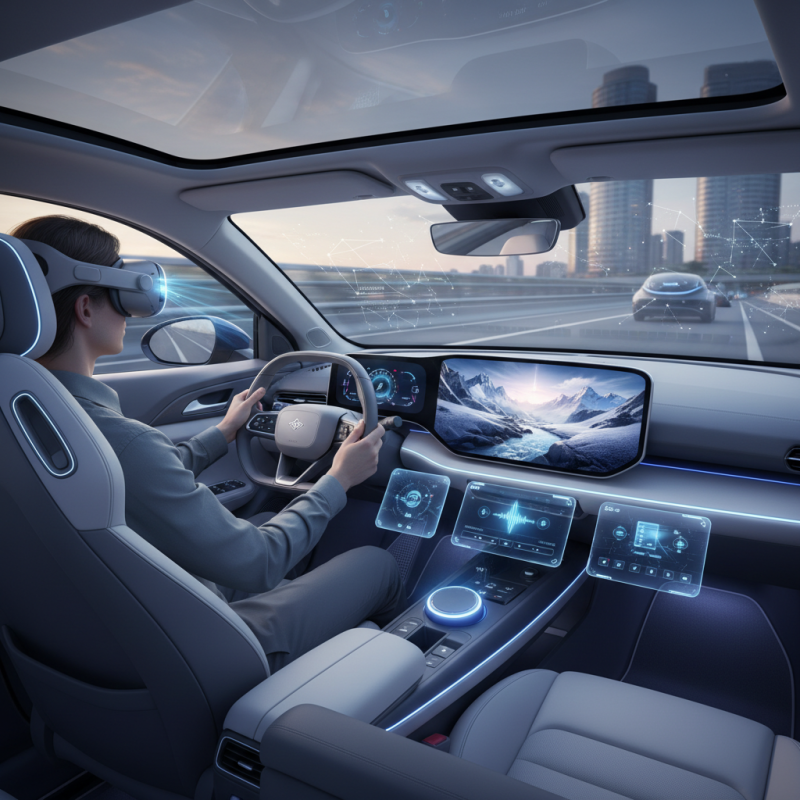
Imagine a compact car equipped with immersive sound systems and integrated displays. Virtual reality experiences could become common, turning routine drives into adventures. However, this progress raises questions about safety and distraction levels. The balance between entertainment and attention is crucial.
New features like voice control and customizable interfaces are on the rise. Yet, not all users may adapt to these changes smoothly. There may be a learning curve that could frustrate some drivers. As we look forward to these enhancements, we must reflect on their impact on the overall driving experience.
The Rise of In-Car Voice Assistants in 2026: Market Insights and Stats
In 2026, in-car voice assistants are set to reshape the driving experience. These systems will enhance convenience and safety. Drivers can control navigation, music, and calls with simple voice commands. Statistics predict a significant rise in user adoption, with many considering it essential.
Despite the hype, challenges persist. Accuracy varies significantly depending on accents and languages. Frustrated users might struggle to complete basic tasks. Improvement is needed as many voice systems still misinterpret commands. Developers must focus on accuracy and responsiveness to build trust among users.
Tip: When using voice commands,
speak clearly and avoid background noise. This ensures better recognition.
Additionally, users should be aware of privacy concerns. Voice assistants often collect data to improve performance. This raises questions about
how much data is stored and used.
Awareness and transparency from developers are vital.
Tip: Regularly review privacy settings in your vehicle.
Adjust them according to your comfort level with data sharing.
Integration of Augmented Reality Dashboards in Automotive Entertainment Systems
The integration of augmented reality (AR) dashboards in automotive entertainment systems is gaining traction. By 2026, reports predict that AR will drive a market growth of over 30%. This technology transforms the driving experience. It overlays digital information onto real-world views. As a result, it enhances navigation, entertainment, and vehicle status monitoring.
Imagine driving with critical data projected onto the windshield. Real-time updates can show speed and directions. This reduces distractions and keeps drivers focused on the road. However, not all AR implementations are smooth. Users may find interfaces cluttered or overwhelming. Difficulty in filtering information is a common complaint.
Moreover, privacy issues arise with data collection. AR systems often rely on continuous data inputs. This raises concerns about how personal information is used. Balancing user experience and data security is crucial. Addressing these challenges will be vital as AR technology evolves in vehicles. As experts say, technology must enhance safety, not compromise it.
2026 Top Car Entertainment System Trends
User-Centric Design Trends: Enhancing User Experience in Vehicle Infotainment
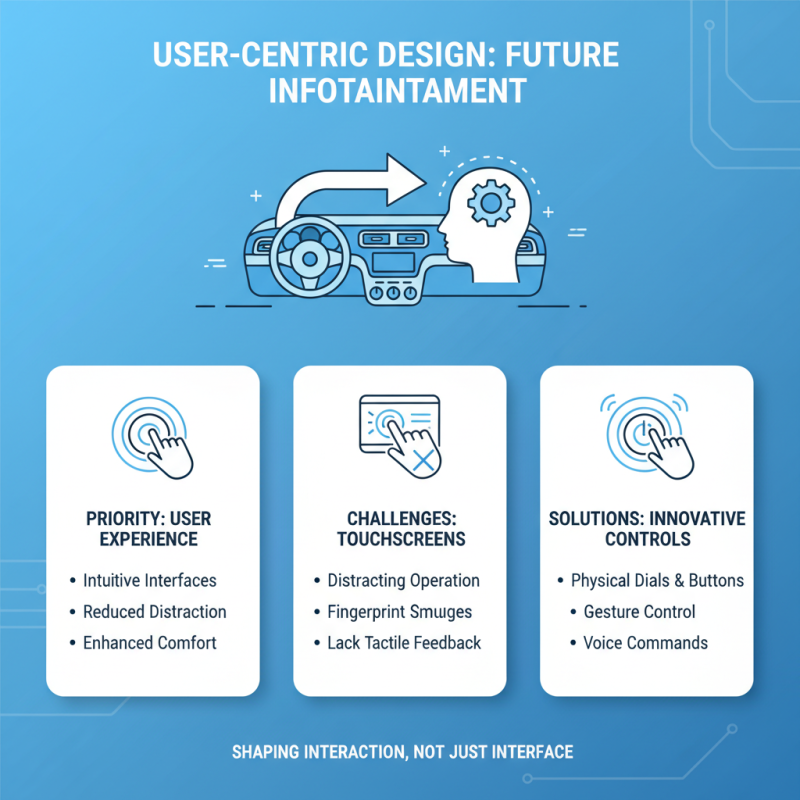
User-centric design is shaping the future of vehicle infotainment systems. This trend focuses on enhancing user experience by prioritizing how drivers and passengers interact with technology. Intuitive interfaces are vital. Touch screens are common, but they aren’t always user-friendly. Some find them distracting.
Moreover, voice recognition technology is evolving. It allows drivers to control navigation and media without taking their eyes off the road. However, misinterpretations can lead to frustration. Users want seamless interactions, not obstacles. Customization has become essential. Drivers want the freedom to personalize options, ensuring comfort on every journey.
Feedback mechanisms play a crucial role. They help designers understand user needs and preferences. However, they are not perfect. Many systems still miss the mark on certain functionalities. Continuous improvement is necessary. Creating an enjoyable user experience requires constant reflection and adaptation. A balance is needed between technology and usability.
Streaming Services Dominating Car Entertainment: Statistics and Predictions for 2026
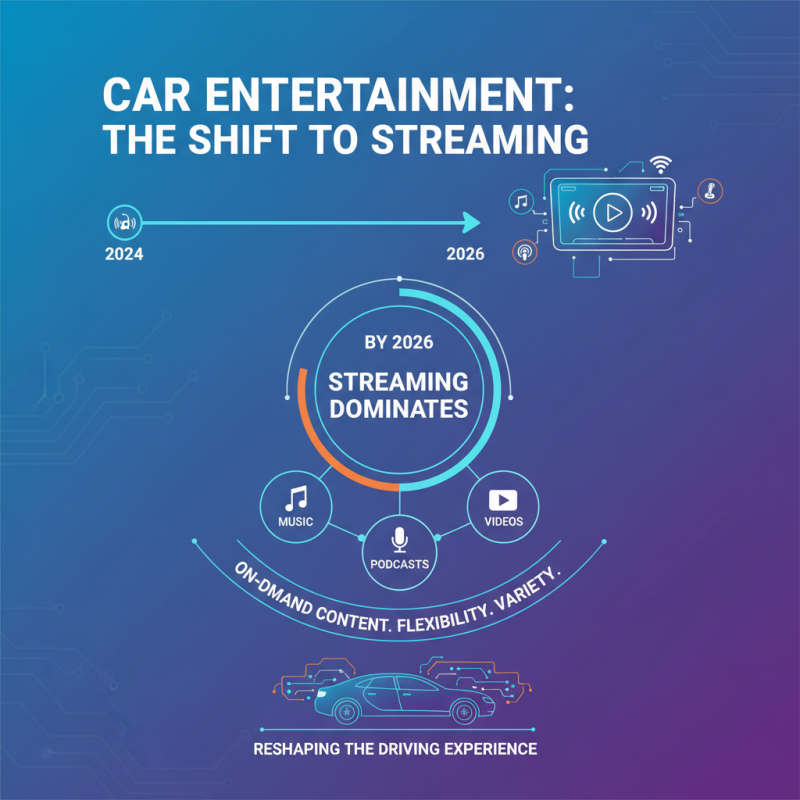
The car entertainment landscape is shifting rapidly. By 2026, streaming services will dominate this space. Consumers are increasingly favoring on-demand content. They want flexibility and variety while driving. Music, podcasts, and videos are all accessible at their fingertips. This trend is reshaping how people interact with their vehicles.
Statistics indicate a significant rise in streaming subscriptions related to automotive use. Predictions suggest that over 70% of drivers will prefer streaming services. This shift is not merely a fad. It reflects broader changes in technology and consumer behavior. However, the reliance on streaming brings challenges. Connectivity issues can disrupt the experience. Navigating through content can also distract drivers. This raises questions about safety while driving.
As streaming services expand their offerings, personalization becomes essential. Tailoring content to individual preferences could enhance enjoyment. Still, it’s critical to balance innovation with usability. Overloading users with choices might frustrate them. Ultimately, the evolution of car entertainment will require ongoing dialogue between developers and consumers. Their feedback will shape future advancements.
The Role of 5G in Revolutionizing In-Car Connectivity and Entertainment Systems
5G technology is set to change the game for in-car connectivity and entertainment systems. With increased bandwidth, vehicles can now support multiple devices simultaneously. A recent report indicates that the global market for in-car entertainment is projected to exceed $30 billion by 2026. This growth is largely driven by high-speed connectivity and the demand for seamless streaming experiences.
5G networks offer latencies as low as one millisecond, enhancing the responsiveness of applications. Passengers can enjoy high-definition streaming without buffering. However, challenges remain. Not all regions have 5G coverage. Implementation can vary, leaving some users disconnected. Furthermore, cybersecurity is a concern. The more connected vehicles become, the higher the risk of hacking.
Voice-activated systems and AI integration continue to rise. By using 5G, cars can process complex commands faster. Real-time updates for navigation and entertainment become commonplace. Yet, reliance on technology raises questions about user experience. Many still feel overwhelmed by these advanced systems. Balancing innovation with usability is crucial in this evolving landscape.